A phrase you will see often in our communications is 'living knitting heritage'. This is a purposeful choice of words. Historically, heritage work has dealt with the protection and management of tangible items and sites, rather than lived practices. A manor house or battlefield may be designated a heritage site because of its historical significance or cultural value. A tool or machine may be a heritage item representing something that happened, but the happening itself was not, technically speaking, viewed as an aspect of 'heritage'.
This view on heritage began to change about 20 years ago, helped by work such as Laurajane Smith's Uses of Heritage.
In her opening pages, Smith describes watching women gather at a riverside to fish. As they did so, the women were not just gathering food. They were sharing stories, strengthening relationships, and being together in a place that was important to them. She saw parallels with her own life experiences where she had acted out elements of her culture with others. For Smith, these experiences were all examples of lived heritage. They were actions that perpetuated culture, but they didn't necessarily leave an artefact behind to be preserved, so they were often overlooked. Such cultural elements of gathering, celebration, and craft became recognised as intangible, or non-physical, heritage.
Unfortunately, the world has lost a lot of its intangible heritage. Languages are lost, and with them, songs and stories and the lessons they held. Dances that were once popular become embarrassing to the younger generation. What once was a living practice dies. Those who have an interest are then left scrambling for sources that hint at what the original practice looked like in action.
Many knitters speak about how they enjoy knitting because they feel like it ties them to their forebears. For many, knitting is something that they picked up as a hobby, learning from friends, books, or YouTube. It is a new lived practice for them. Others may have been born into areas of the world with their own unique knitting practice that has continued to be passed along as part of the areas' wider cultures.
Shetland is one of those places. Shetland's knitting heritage has been carried forward for generations and remains a living practice today.
Historically, knitting in Shetland has served practical, social, creative, and economic purposes. Older family members taught younger family members. As many Shetland knitters work, we engage in storytelling; we speak with one another; we calculate sizing, colour choices, and pattern design; we remember the lessons and advice of those who are no longer with us. Knitting also happens alongside other parts of daily life. It's an ongoing presence in Shetland's culture.
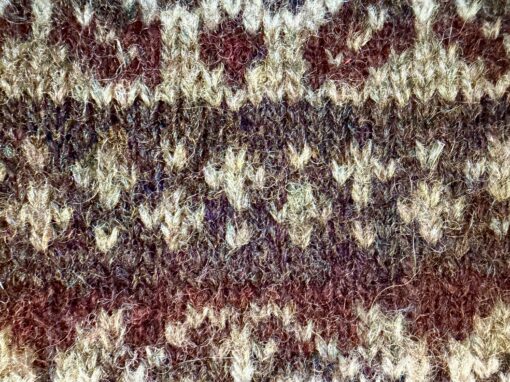
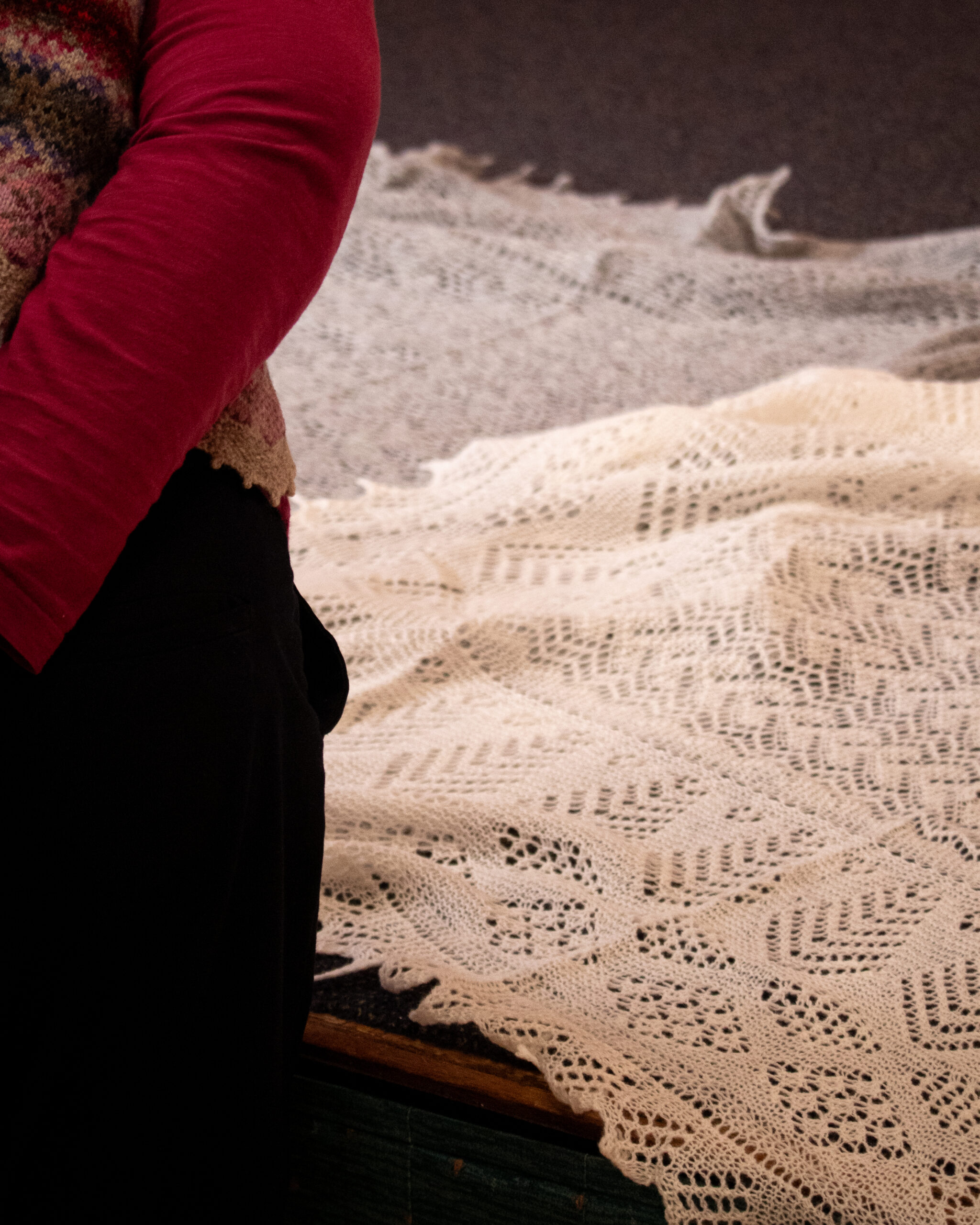
As a heritage craft, the knitters of Shetland do create tangible items, and they can be seen locally at the Shetland Textile Museum, the Shetland Museum and Archives, in community museums throughout the isles, as well as in gift shops and markets. But the practice itself is the element that is intangible, and in Shetland, is still alive and connected to those who first developed the techniques, patterns, and colour sense we carry forward today.
That heritage practice, our living knitting heritage, is in large part what SOK was created to preserve.