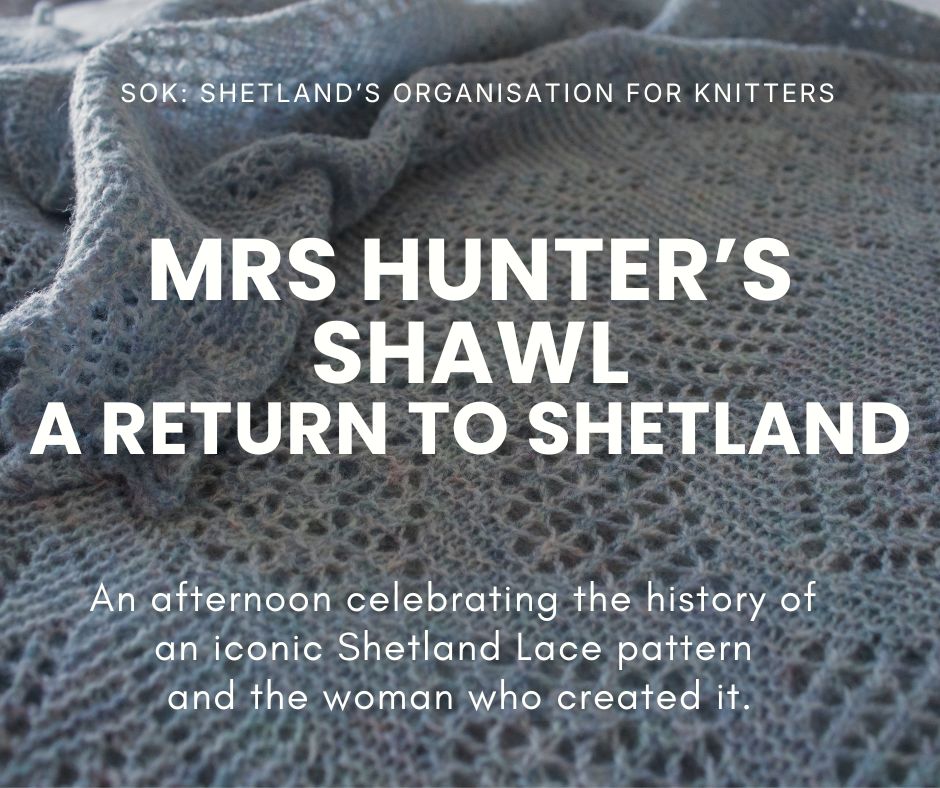
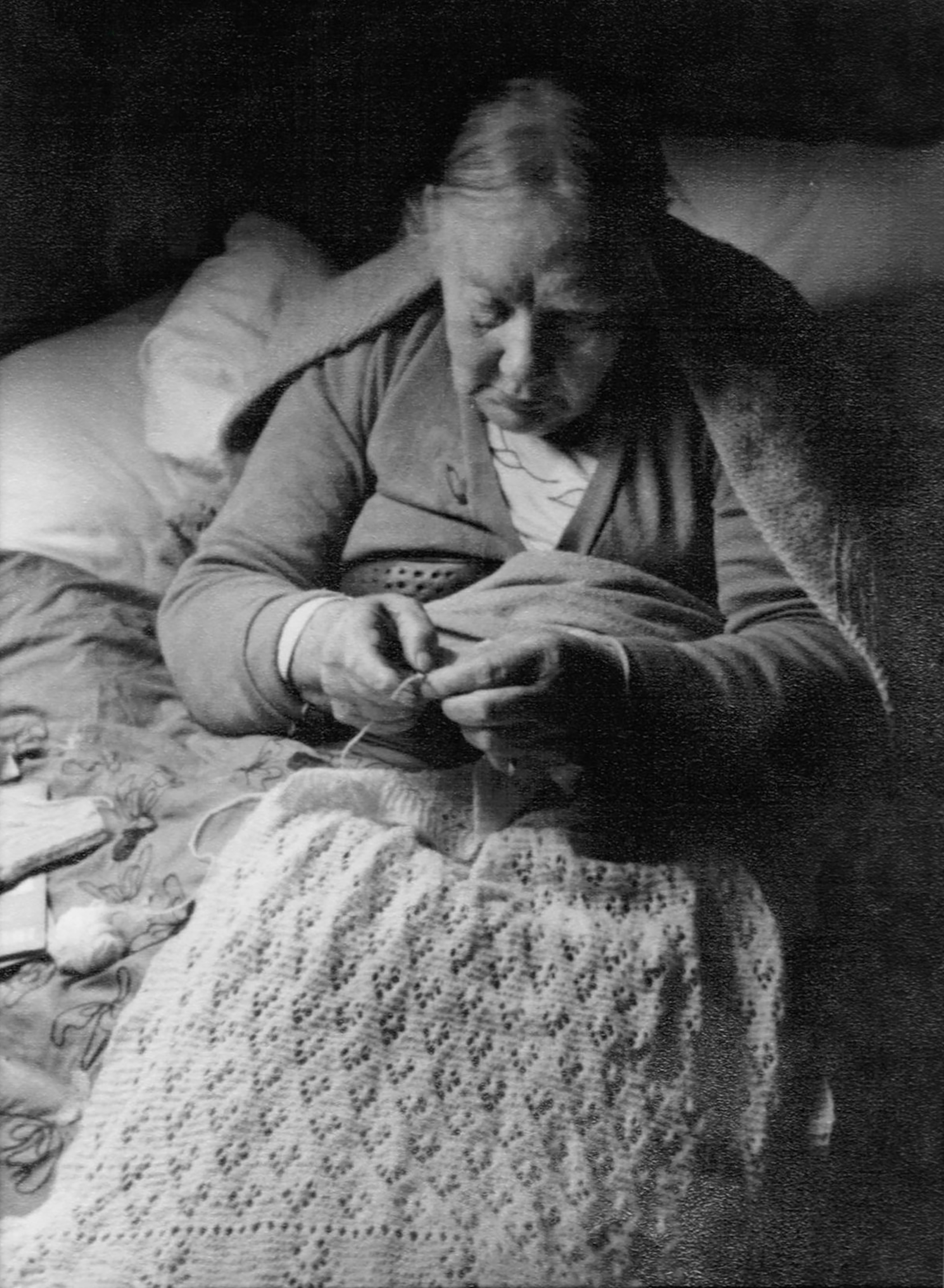
In April 2026, SOK: Shetland’s Organisation for Knitters welcomed more than 80 attendees to 'Mrs Hunter’s Shawl: A Return to Shetland', a public event celebrating the life of Agnes Hunter and the lasting importance of Shetland lace knitting.
The event brought together descendants of Mrs Hunter, local knitters, visitors, and supporters of Shetland textile heritage for a gathering focused not only on a famous shawl pattern, but on the people behind Shetland knitting traditions.
The live event took place in Lerwick, followed by an online event on Saturday 2 May that allowed learners from around the world to learn more about Agnes Hunter and her iconic shawl.
Remembering the People Behind Shetland Lace
Shetland knitting is often discussed in the context of patterns, techniques, and finished objects. SOK believes the stories of the knitters themselves matter just as much.
'Mrs Hunter’s Shawl: A Return to Shetland' formed part of SOK’s wider mission to preserve and protect Shetland’s living knitting heritage. This includes Fair Isle knitting, Shetland lace knitting, and domestic machine knitting traditions.
The afternoon featured remarks from Robin Hunter, a grandson of Agnes Hunter, who spoke about Agnes Hunter's life and paid tribute to the generations of knitters whose work shaped Shetland’s textile culture.
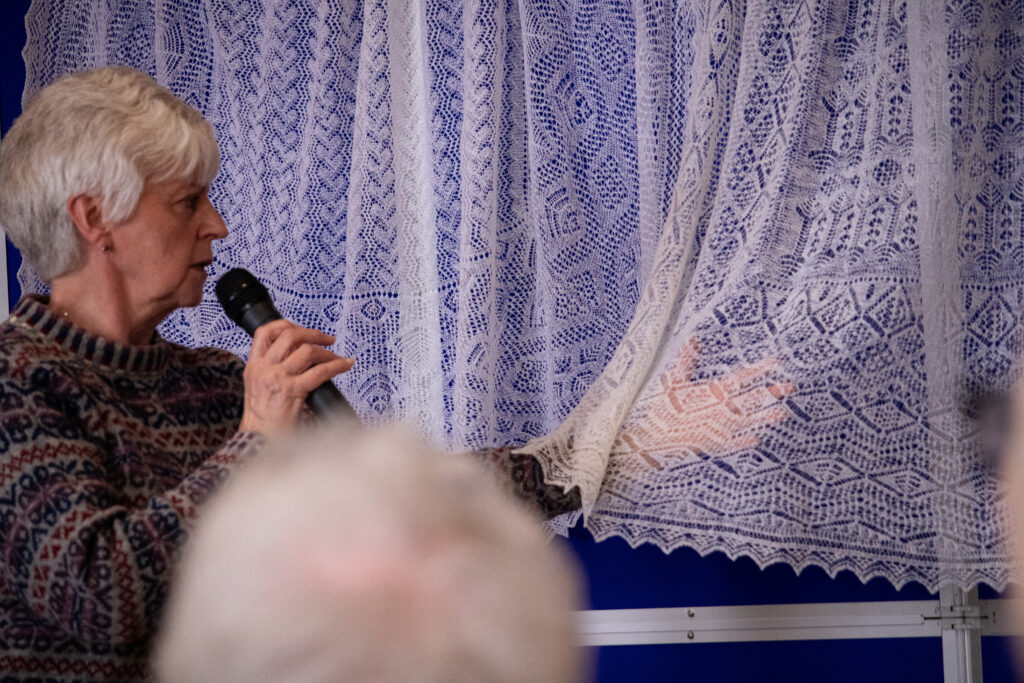
Elizabeth Johnston, trustee of SOK and a respected Shetland knitting tutor and designer, shared the history of the shawl itself and discussed the process of rewriting the historic pattern, returning the Shetland methods to the process so modern knitters can knit it the traditional way.
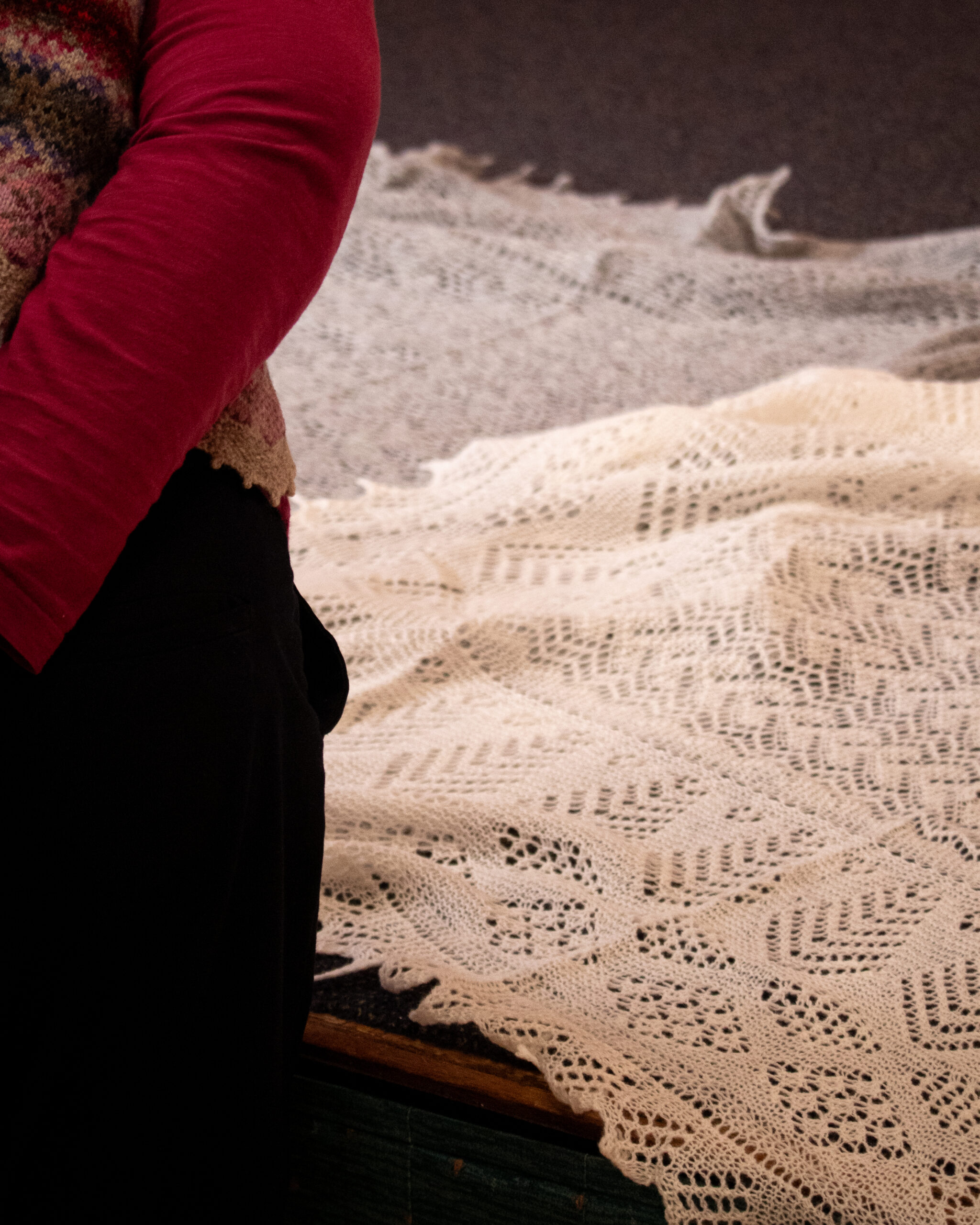
Attendees were treated to displays of shawls knitted by members of the Hunter family through the years, including variations on the Mrs Hunter's Shawl and other examples of traditional Shetland fine lace knitting. In the process of examining the shawls that were shared, skilled lace knitters noticed a join that seemed unfamiliar. Efforts will be made to see if the technique can be reverse engineered and documented.
Preserving Shetland Knitting Traditions
SOK was founded to support the preservation of traditional Shetland knitting skills and to ensure that Shetland knitters remain at the centre of conversations about their own cultural heritage.
Events like this create opportunities for stories, techniques, and community knowledge to be passed from one generation to another in ways that cannot always be captured in books or museum displays.
As interest in Fair Isle knitting and Shetland lace continues to grow internationally, SOK is working to support accurate representation of Shetland knitting traditions while also creating opportunities for local practitioners.
The organisation’s work includes public talks; educational programming; conversations with Shetland knitters to help preserve stories, techniques, and ways of learning; and community gatherings focused on traditional knowledge-sharing.
Thanks to Supporters
SOK would like to thank everyone who attended the event in person and online, as well as those who helped make the day possible.
Special thanks go to No88 for providing soup for attendees, and to Tabnabs & Treats at The Silly Sheep for providing gluten-free and dairy-free lunch and dessert options.
SOK also thanks Robin Hunter and Elizabeth Johnston for sharing their knowledge and family history so generously, and to Terri Leask who acted as host for the event.
Mrs Hunter’s Shawl Pattern
Elizabeth Johnston’s updated version of the Mrs Hunter’s Shawl pattern is available on Ravelry, with proceeds supporting the ongoing work of SOK: Shetland’s Organisation for Knitters.
Through projects like this, SOK hopes to continue drawing attention to the people, skills, and stories that shaped Shetland knitting history and continue to shape it today.