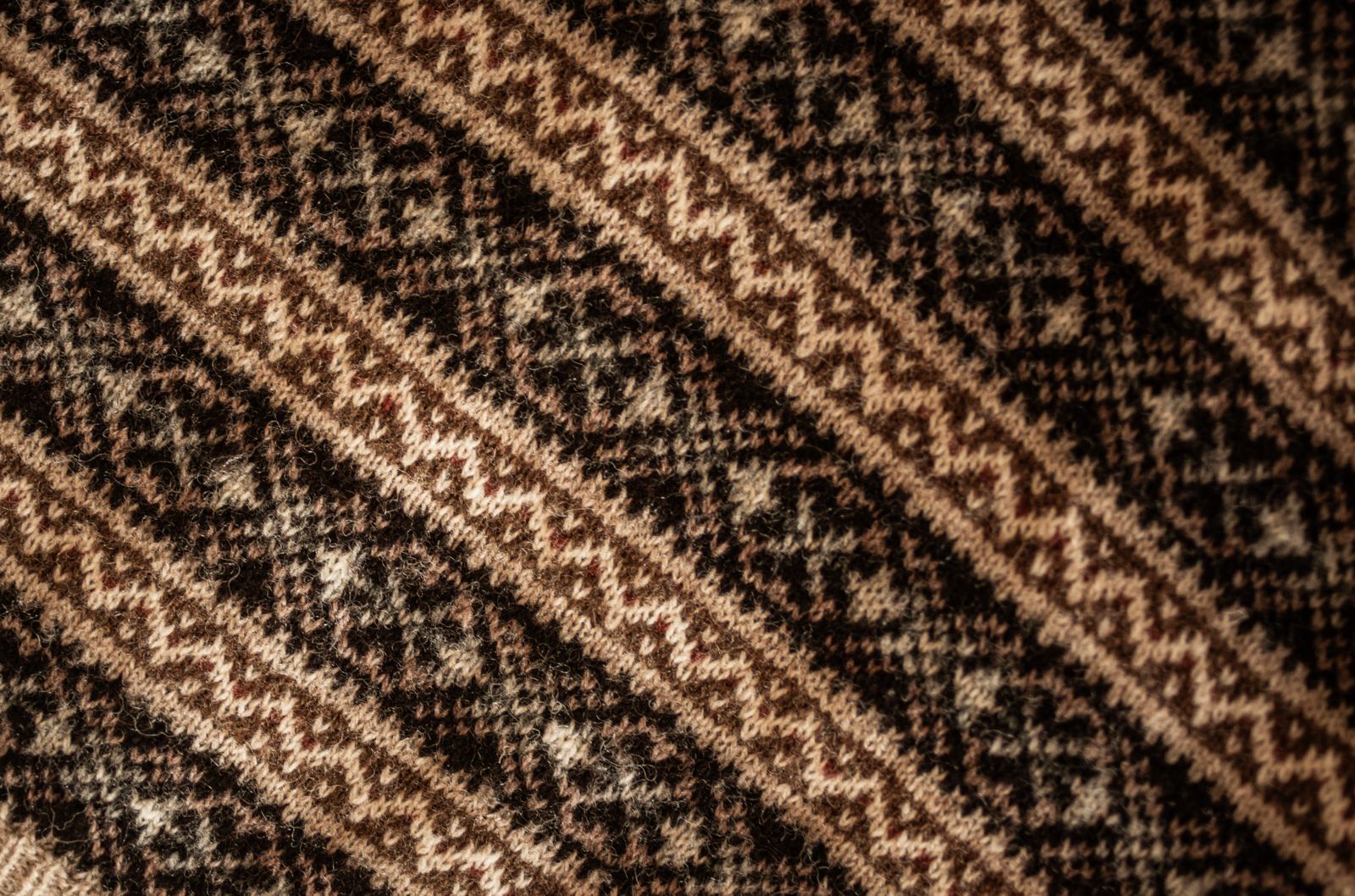
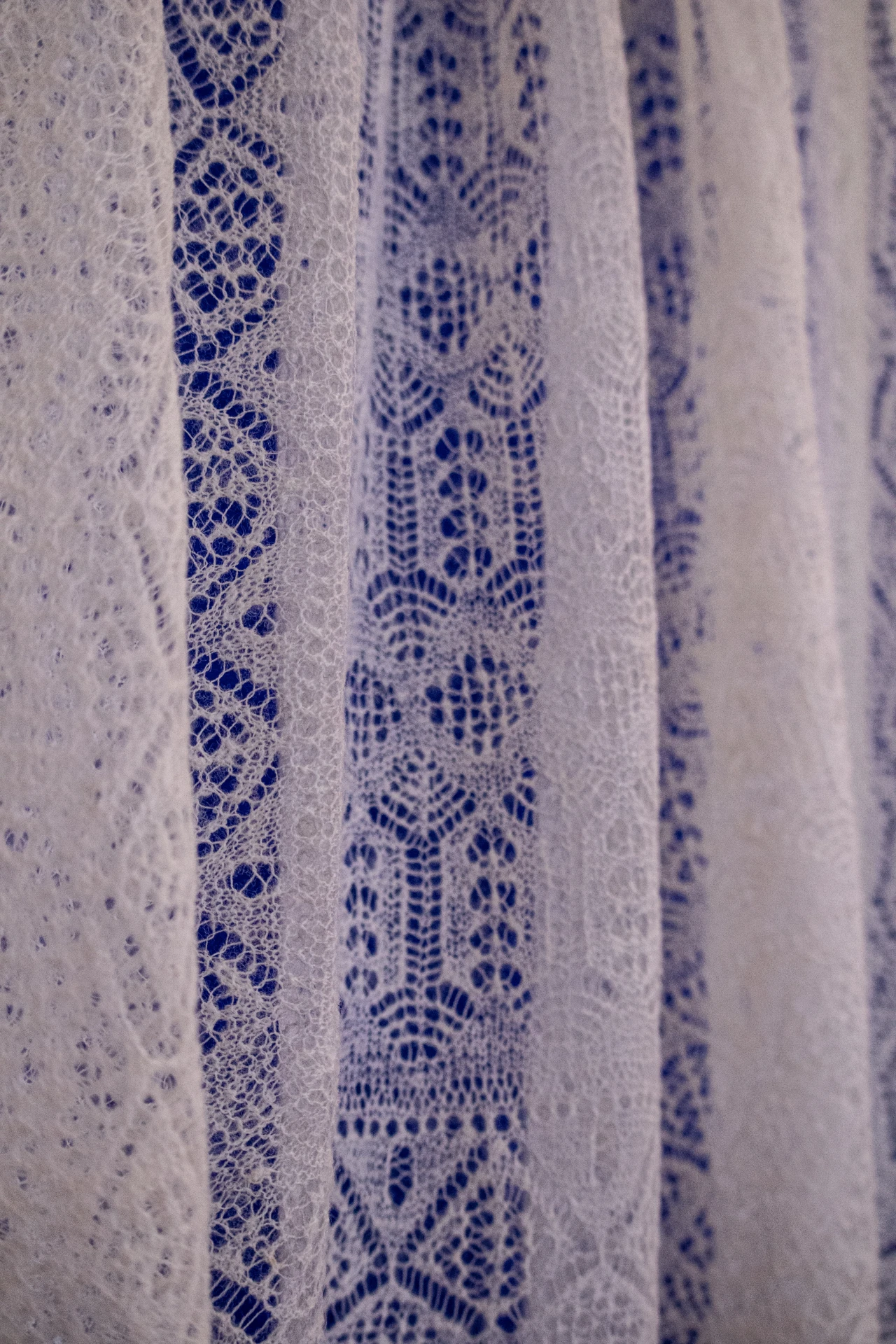
Shetland Lace is referred to in Shetland as Openwark. While some knitters around the world make a distinction between ‘lace knitting’ and ‘knitted lace’, there is no distinction between the two in Shetland; Openwark is, therefore, the preferred term.
Openwark is practiced in Shetland primarily by older women as part of daily life, though there are practitioners of all ages. Because of the complexity of some of the patterns, many Openwark practitioners typically knit at home, but some well-known patterns are familiar enough to allow practitioners to gather to socialise and share knowledge.
Origins
Openwark developed in Shetland in the early 1800s. It is generally believed that an example of lace knitting was brought to Shetland in the form of a knitted lace baby cap, and local knitters were encouraged to use it as inspiration to create other knitted lace items. They applied lace to undergarments, stockings, and eventually large, finely knitted shawls.
Arthur Anderson, a Shetland businessman, gifted a pair of Openwark stockings to Queen Victoria, whose on-going patronage drove demand. As fashions shifted through the years, large lace shawls fell from fashion, and openwark knitters changed with the times, creating openwark veils, tops, and even full dresses using the techniques.
Openwark was a cottage industry throughout Shetland, though some areas became known specifically for their fine lace work, including the knitters on Unst and Northmavine, though skilled openwark knitters live throughout Shetland.
While Openwark was initially inspired by an example of lace from outwith Shetland, local knitters developed their own patterns and construction techniques that are unique to Shetland’s Openwark tradition.
In turn, Shetland emigres took openwark knitting with them to other parts of the world and have influenced other knitting traditions and inspired designs worldwide.
A Craft at Risk
Practitioner numbers declined in the 1970s with the arrival of oil jobs and changes in fashion. Historically, skills were passed orally from older generations to younger at home and by instruction at school. As women left knitting work in favour of better paying jobs in the oil industry, school became the primary source of knitting instruction for many Shetlanders.
Knitting instruction in schools ended in the early 2000s. Many Shetlanders realised that there was a generation of adults who had not learned to knit to a high standard, and with the loss of instruction in the schools, there was a real risk that knowledge of local, traditional knitting methods would be lost.
A movement to return knitting instruction to the schools resulted in the creation of the ShetlandPeerieMakkers. This volunteer organisation teaches primary-aged school children the basics of Fair Isle and Openwark by running small, seasonal clubs.
Additionally Openwark faces risks beyond the interruption of traditional instruction: aging practitioners, costs of formal classes, misinformation in print and media, and influencer culture that drowns out the voices and knowledge of expert practitioners. The craft’s complexity and time required for larger projects deter people from taking it up, as well as the relatively small market for Shetland lace items. A lack of reliable documentation makes it difficult to reference written materials about the craft. These issues all pose a serious threat to the preservation and transmission of accurate skills and methods.
A Living Knitting Heritage
Openwork has had an impact on Shetland’s local culture, and continues to do so to this day. It is a lived practice that influences how Shetlanders interact with one another, creates shared references, affects how people dress, and shapes how knitters think.
The process of production and passing along the skills create time and space for intergenerational bonding, which draws family members together and allows them to share their thoughts, convey social expectations, and pass along traditional stories.
There are traditional songs, poems, and stories that reference the craft while conveying social expectations, sharing local mythologies, and creating a sense of community belonging.
Fine Openwark is still worn by local people on special occasions such as weddings and other significant milestone days. Additionally, many Shetlanders wear clothing and accessories that feature Openwark. More recently, openwark is sometimes knitted with wire to create jewellery and home decor, and area jewellers have been inspired by the look of Openwark as they create Shetland-specific designs.
Most Openwark knitting instruction that takes place locally has been done orally, often by copying a preexisting piece of work. This process evolves over time to the use of knitted samples or graph books to test out designs. Eventually, many traditional Openwark knitters will design a garment in their mind, as they knit, drawing from their experience. This learning process shapes the Shetland knitter’s mind, creating a high competency of mathematical thinking as practitioners plan pattern placement and modify patterns (motifs) to fit the required size of the garment while maintaining symmetry.
Tools and Materials
Traditionally, Shetland’s Openwark knitters used a limited number of rolls, including:
- Knitting, or makkin, belts
- Double pointed knitting needles up to 40cm long
- Raeping string
- Grafter (sewing needle suitable for yarn)
- Hap stretchers, wooden frames that stretched garments after washing
Initially, many Openwark knitters used local, Shetland wool, hand spun very finely. Indeed, spinning for fine Openwark knitting is a heritage craft in its own right. However, the demand for yarn outstripped the local spinner’s ability to produce, and from its early days, Openwark knitters also used silk, mohair, and other yarns imported to Shetland. Today, local Openwark knitters continue to use a variety of types of fibers and yarn thicknesses to create their projects, though finely-spun, Shetland wool is considered to be the most traditional choice.