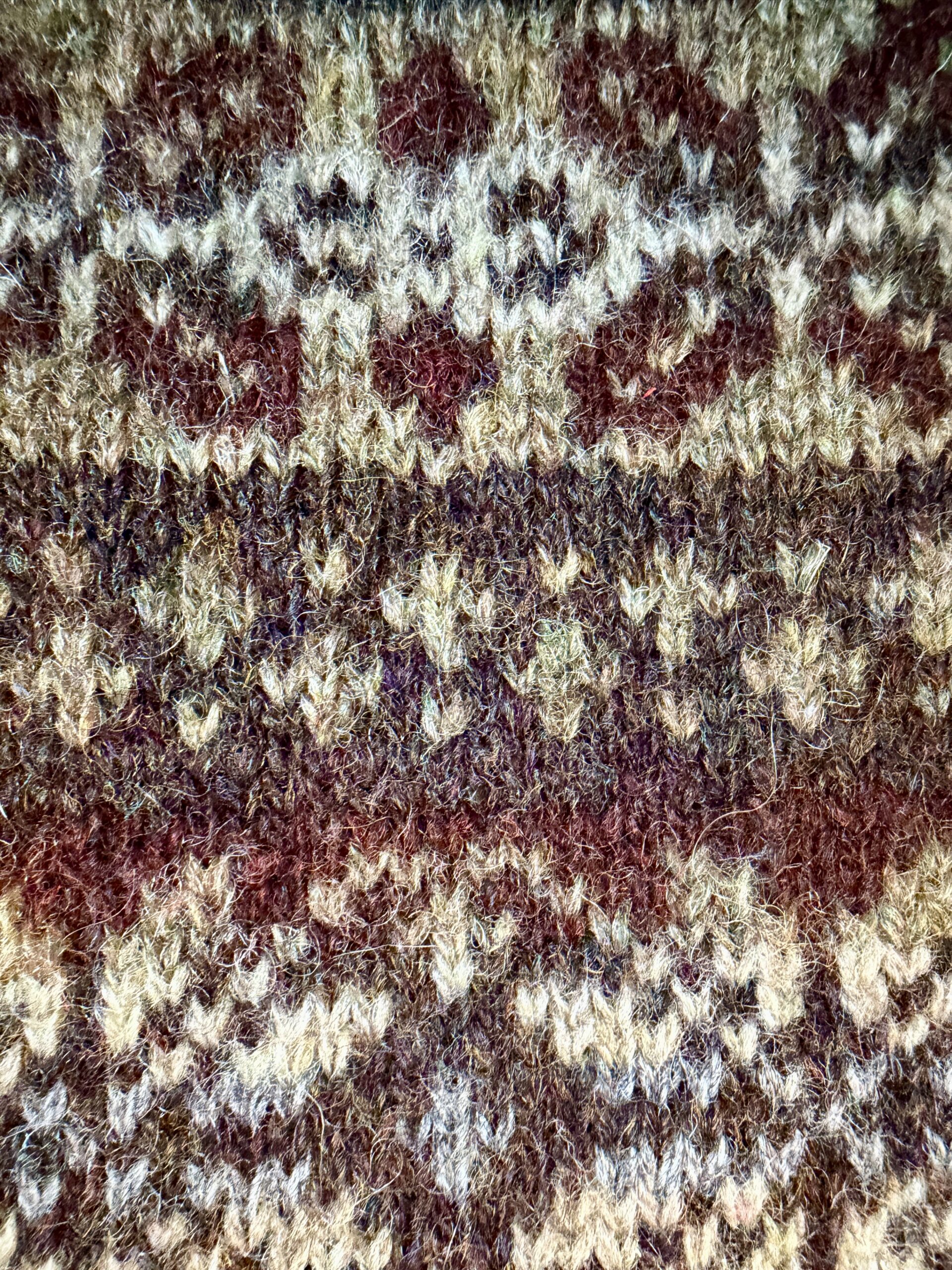
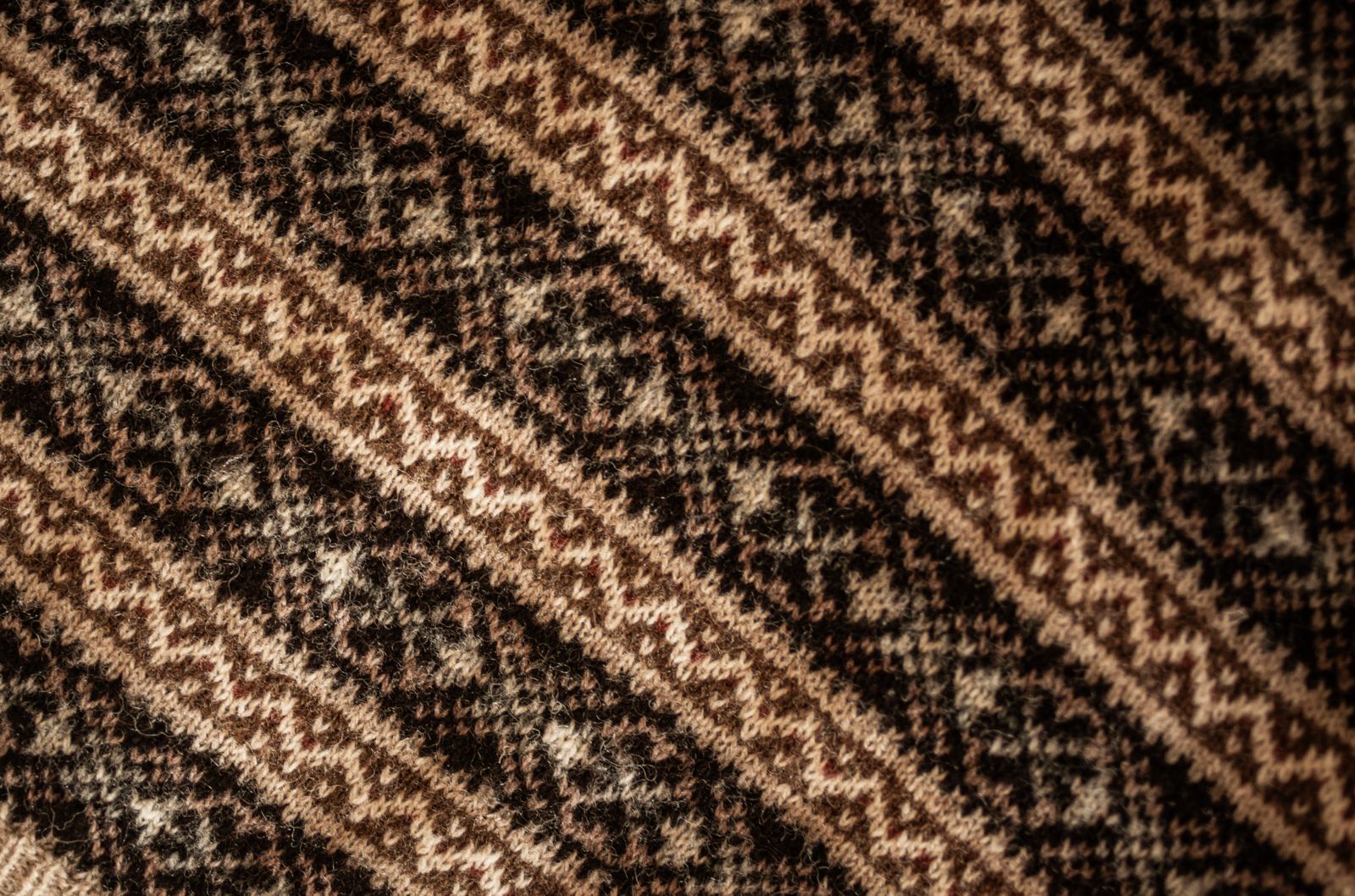
Fair Isle knitting is practiced in Shetland primarily by older women as part of daily life, though there are practitioners of all ages. Because of the age of the area’s most skilled practitioners, many in the area consider this living heritage craft to be endangered.
Origins
The origins of Fair Isle knitting are unknown. It takes its name from Fair Isle, a small island located between the Shetland mainland and Orkney, believed to be where the craft was first developed. The earliest example in Shetland of knitting with more than one colour dates to c. 1700 century. The oldest extant piece of Fair Isle knitting dates to c.1850, but was already an advanced example, suggesting that the craft had already existed before that time.
Fair Isle knitting spread throughout Shetland as a cottage industry. Because it was done professionally to supply demand for handknit goods beyond Shetland, knitters were held to a high standard. Women knitted anytime their hands were free. Many local knitters still work from memory and experience, without printed guides.
Shetland’s emigres took Fair Isle knitting with them to other parts of the world. Fair Isle knitting has influenced other knitting traditions and inspired designs worldwide.
Through the years, style developments were led by fashion. Innovations in patterning, colour choices, and garment shapes helped Fair Isle hold its place in general fashion for nearly 200 years.
A Craft at Risk
Practitioner numbers declined in the 1970s with the arrival of oil jobs. Historically, skills were passed orally from older generations to younger at home and school. As women left knitting work in favour of better paying jobs in the oil industry, school became the primary source of knitting instruction for many Shetlanders.
However, knitting instruction in schools ended in the early 2000s. Many Shetlanders realised that there was a generation of adults who had not learned to knit to a high standard, and with the loss of instruction in the schools, there was a real risk that knowledge of local, traditional knitting methods would be lost.
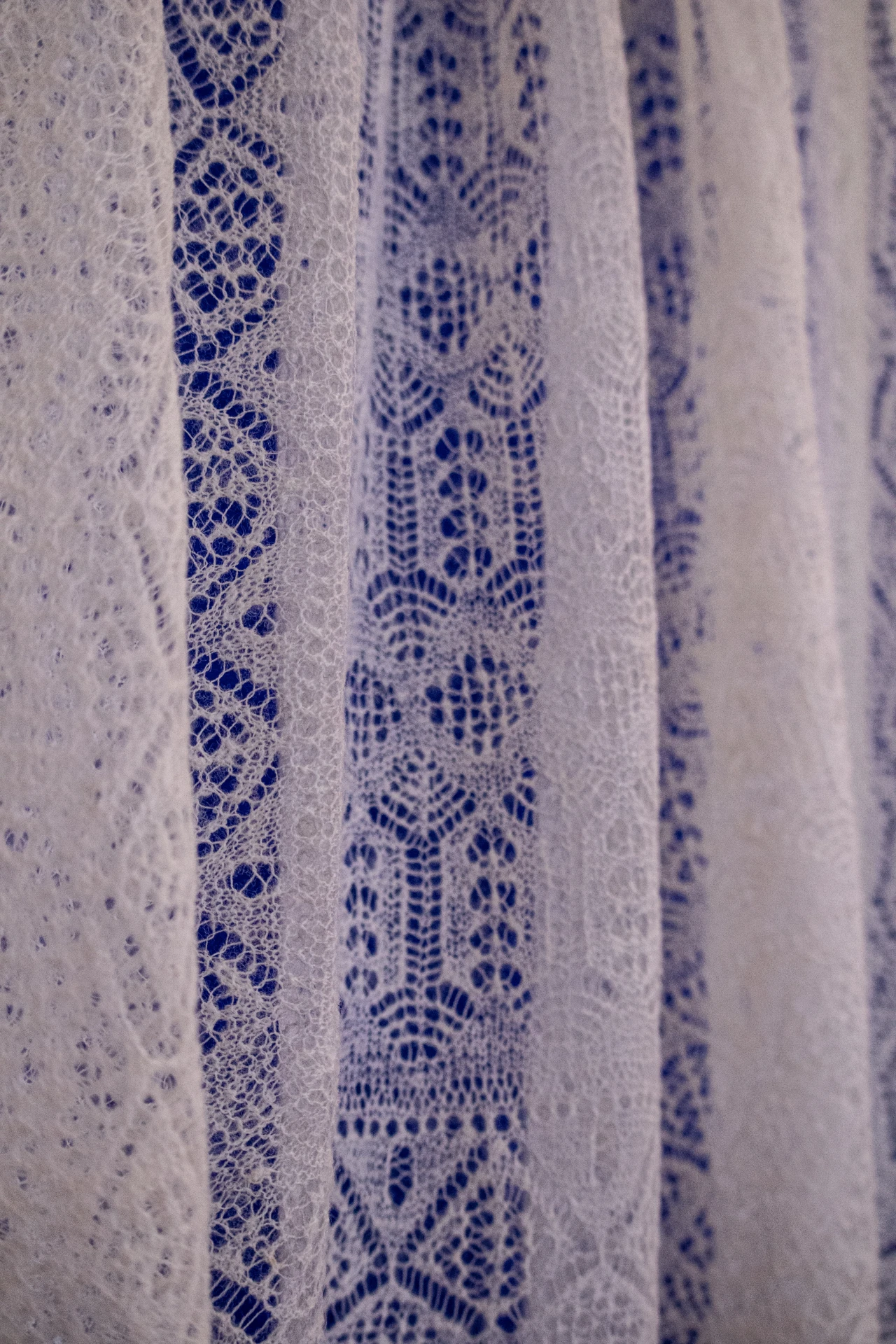
A movement to return knitting instruction to the schools resulted in the creation of the ShetlandPeerieMakkers. This volunteer organisation teaches primary-aged school children the basics of Fair Isle and Shetland Lace (Openwark) knitting by running small, seasonal clubs.
Additionally, Fair Isle faces risks beyond the interruption of traditional instruction: the cost of formal classes, readily available misinformation in print and media, and influencer culture that drowns out the voices of expert practitioners all pose a serious threat to the preservation and transmission of accurate skills and methods.
A Living Knitting Heritage
Fair Isle knitting has had an impact on Shetland’s local culture, and continues to do so to this day. It is a lived practice that influences how Shetlanders interact with one another, creates shared references, affects how people dress, and shapes how knitters think.
The process of production and passing along the skills create time and space for intergenerational bonding, which draws family members together and allows them to share their thoughts, convey social expectations, and pass along traditional stories.
There are traditional songs, poems, and stories that reference the craft while conveying social expectations, sharing local mythologies, and creating a sense of belonging.
People in Shetland wear Fair Isle for many reasons, including as a wise fashion choice for an often wet and windy climate. However, wearing Fair Isle is also a social marker, indicating one’s ties to Shetland, crofting, and the community in general.
Most Fair Isle knitting instruction that takes place locally has been done orally, often by copying a preexisting piece of work. This process evolves over time to the use of graph books to test out patterns or colours, but eventually, most traditional Fair Isle knitters will design a garment in their mind, as they knit, drawing from their experience. This process shapes the Shetland knitter’s mind, creating a high competency of mathematical thinking as practitioners plan pattern placement and modify patterns (motifs) to fit the required size of the garment while maintaining symmetry.
Tools and Materials
Traditionally, Shetland’s Fair Isle knitters used a limited number of tools, including:
- Knitting, or makkin, belts
- Double pointed knitting needles up to 40cm long (wires)
- Raeping string (a string used to apply tension to the project on their wires)
- Grafter (sewing needle suitable for yarn)
- Boards, wooden forms that shaped garments after washing
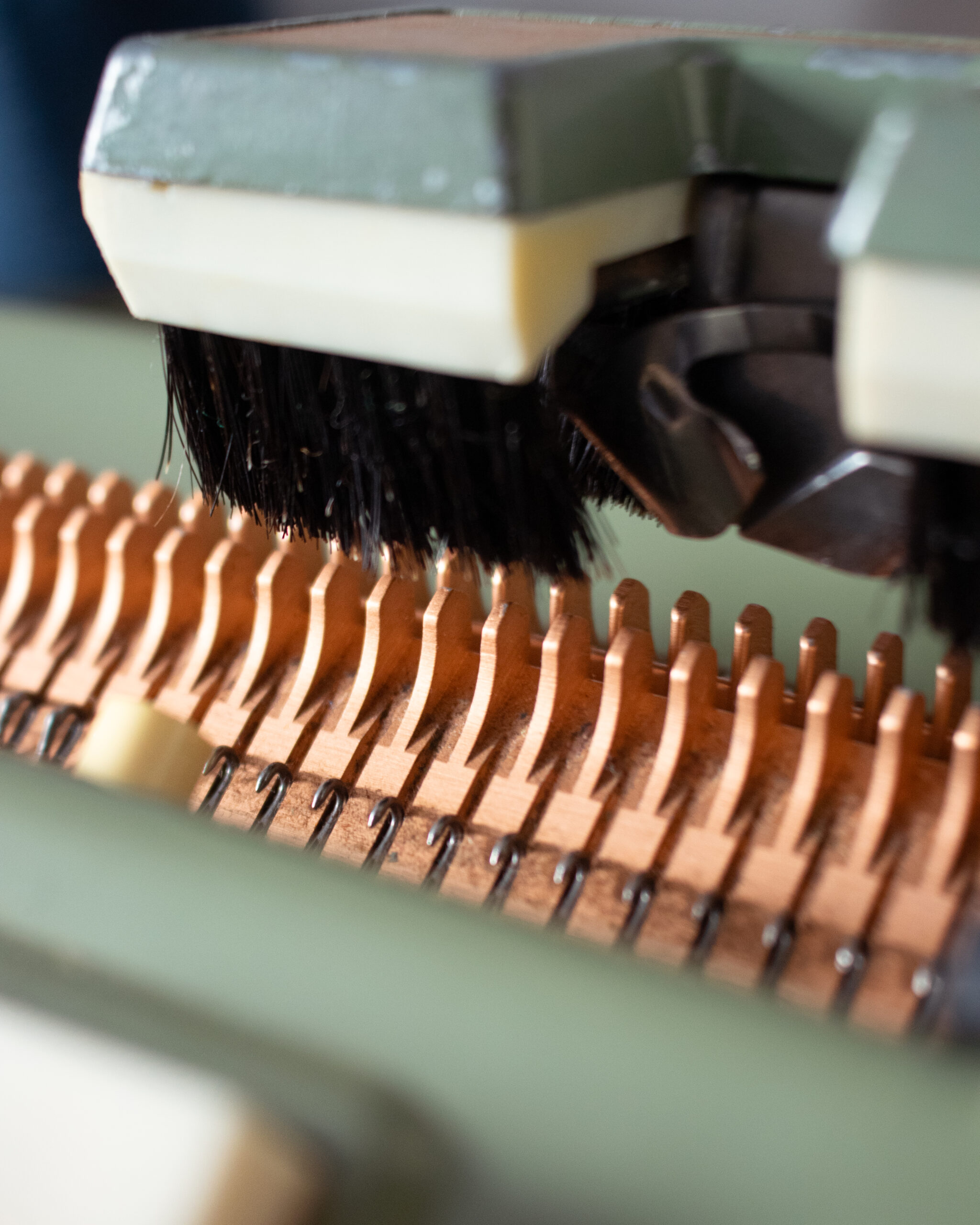
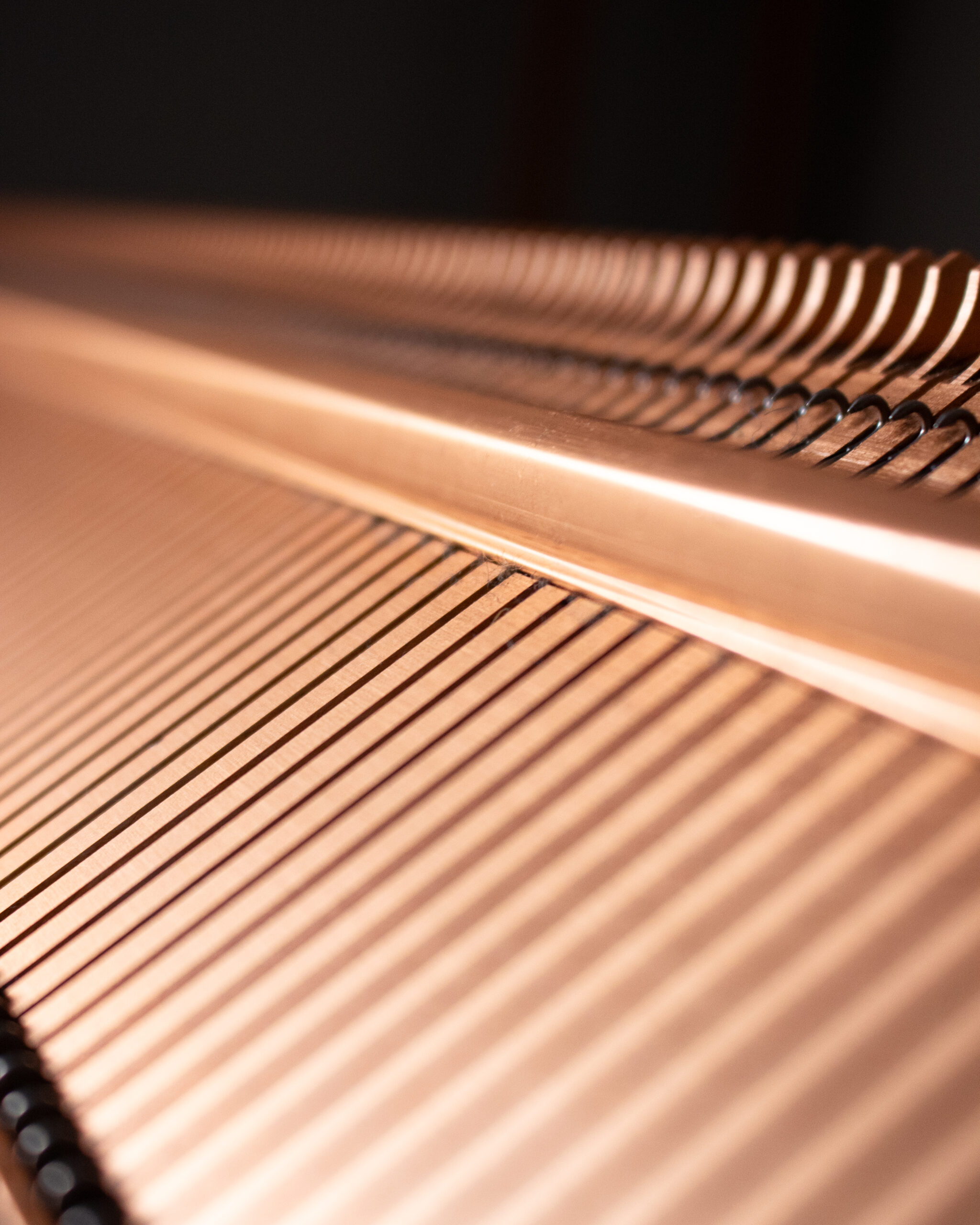
- Knitting machine and accessories
Typically, Shetland’s Fair Isle knitters used the abundance of Shetland wool available to them. Local spinners would transform the wool to yarn, or it would be sent away to the British mainland for processing. Shetland did not have a mill of its own until the 1980s.
After nylon yarn became available, Shetland knitters had a period of knitting Fair Isle pieces entirely from nylon or as a combination of wool and nylon yarn. When fashion demanded wash-and-wear convenience, some Shetland knitters transitioned to knitting with acrylic yarn. Today, most Shetland knitters consider Shetland wool to be the ideal option for traditional Fair Isle knitting.