Domestic machine knitting is currently practiced in Shetland at small numbers by both men and women of a variety of ages. Because of the lack of opportunity to make a living from knitting with a domestic knitting machine and the lack of available tuition for how to use these machines, many in the area consider this living heritage craft to be endangered.
Origins
Manual knitting machines could be found in small scale factory settings in Shetland from the early 1930’s. These firms mainly employed men with transferable skills from fishing, crofting and Shetland’s weaving industry.
Domestic machine knitting became an everyday part of life from the 1960s. The increase in demand for knitwear created opportunities for households to own their own v-bed knitting machines and increase the output of the hand knitting that was already happening in the home, further supplementing the family income.
A variety of roles took shape, allowing people to work according to their skill and interest. Roles included the machine knitter, hand knitters, finishers, and dressers, who all worked together to complete the garment. These teams often formed within families, with each person taking on a specialised role. Women took the opportunity to build their own teams from members of the community, thereby creating their own small businesses.
Machine knitting could fit around the seasonal work of families involved in fishing or agriculture. Men often spent the darker nights of winter machine knitting to continue to contribute to the family’s income, while children could also be trusted with larger sections of machine knitting where moving the carriage from side to side was all that was required.
Machine knitting contributed to the formalisation of knitwear production within families and communities. It created the opportunity for knitters to work as part of a team. Whereas handknitting had been in individual process, the number of roles involved in machine knitting often meant communities would form a team to the benefit of all. A more cooperative model of work evolved.
Machine knitters found themselves with a larger variety of opportunities for work. While factories continued to look for domestic machine knitters to fulfil orders, the machine knitters were not limited to only factory work. Buyers from the UK mainland would place calls for knitwear in the papers that home machine knitters could fulfill directly, or they could produce knitwear for merchants in the town. The ability to negotiate their own terms for their finished work empowered the machine knitters in a way that previous systems in Shetland’s knitwear industry did not allow for.
There were several ways in which families could acquire a knitting machine. Many would save from their knitting income to invest in this type of equipment upgrade. It was also common for women in Shetland to inherit money, while men inherited land. Some women would use their financial inheritance to invest in a machine to improve their on-going earning potential. In other cases factories would provide a knitting machine to the knitter with an agreement that the knitter would pay off the balance by knitting for that firm.
In the 1970’s, knitting machines with the capability for knitting Fair Isle and simple lace became available, and there was a strong interest from Shetland’s knitters. In the 1980s, Shetland Islands Council provided knitters with a 50% grant to support the purchase of a flat bed knitting machine. Formal evening classes were also available through the Shetland college, providing the necessary training to the mainly women who wanted to join the industry.
Machine knitters in Shetland come from a hand-knitting background, and apply the same design processes and high standards to their machine knitting. They developed methods over time that minimised the need for hand finishing and apply similar thinking regarding overall design and quality.
A Craft At Risk
Despite the financial support available to buy knitting machines, many women entering the workforce preferred to take on jobs in other emerging industries within Shetland, such as oil and administration. Secretarial jobs with an hourly wage were appealing to girls leaving school, and spending time at home knitting with family members became less common.
Some women later learned to use the knitting machine when they started their own families and needed work closer to home. Others picked up the skills to support the machine knitters, in roles such as finishing or adding the hand knit embellishments to machine knitted pieces. Overall, the rate of knitters learning machine knitting skills slowed down rapidly in the early 1970’s.
The over abundance of knitting machines in Shetland meant many locals acquired them later in life, either to earn additional income or to knit pieces for family and friends. Earning a living wage from machine knitting alone is currently unrealistic for most, as the amount of work and skill involved is commonly misunderstood, resulting in a misalignment between the actual cost of the work and with the perceived value of the end result.
UHI Shetland (Shetland College) has been a study destination for textile students looking to immerse themselves in Shetland’s culture as they learn. The Shetland College offered a textile program that covered both knitting and weaving. In 2023, the textile department closed due to budget cuts and restructuring, causing further concern within the Shetland textile community about the preservation of the area’s skills. The number of graduates entering the industry fell, and formal, locally-based study opportunities for Shetlanders became unavailable.
Domestic knitting machines are now commonly inherited from family, found in charity shops, and are available within local online marketplaces. Some small businesses still use domestic knitting machines within their business, though this is becoming increasingly rare.
Machine knitting within Shetland has seen technological advancements with the use of industrial machines and computer aided manufacturing within the knitwear factories. Trained technicians programme designs into software in order to create the knitted garments. These have been welcomed within Shetland, creating modern jobs to meet the demand of knitwear from Shetland and boosting the overall economy, however opportunities to acquire skills in domestic machine knitting are becoming increasingly rare.
The decline of domestic machine knitting as a part of daily life, students not having access to local tuition, and the reduction of domestic knitting machine in factories have all contributed to the decline in domestic knitting machine skills,despite the value the Shetland knitting community has placed on the skills themselves and the part they have played in the story of Shetland knitting.
Living Heritage
Domestic machine knitting has had an impact on Shetland’s local culture and continues to do so to this day. It is a lived practice that is part of a common cultural experience for Shetlanders, but it is at severe risk as the most active practitioners age.
A generation of Shetlanders recall the knitting machine playing a key part in their childhood. Some speak of knowing what day of the week it was based on how the “finished” pile grew. Many fondly remember the sound of a parent using the knitting machine as they were falling asleep at night. Some still find comfort in the sound of the carriage, saying that it gives them the feeling of being tired at the end of the day and knowing that Mam is home.
The majority of people who still practice domestic machine knitting in Shetland are 70 or over. They developed their skills as machine knitters before the introduction of industrial machines to the area. While some younger people have learned machine knitting from family or through the formal courses at Shetland College, the inability to earn a living from the work has severely impacted how many of them have continued into the field. While some use the domestic machine from time to time as a hobby, most younger practitioners who are still in knitwear have applied their skills to the industrial machines.
Now, machine knitting is mainly taught informally; however, demand for tuition on how to use domestic knitting machines, as well as how to maintain them, is increasing within the community due to concern that the craft may die out.
Some practitioners continue to knit for local retailers. Others use their domestic machines to knit clothing for their family members, who proudly wear them as personal pieces that reflect their Shetland heritage. A small number of practitioners use their domestic machines for creative purposes, such as creating artwork.
Tools and Materials
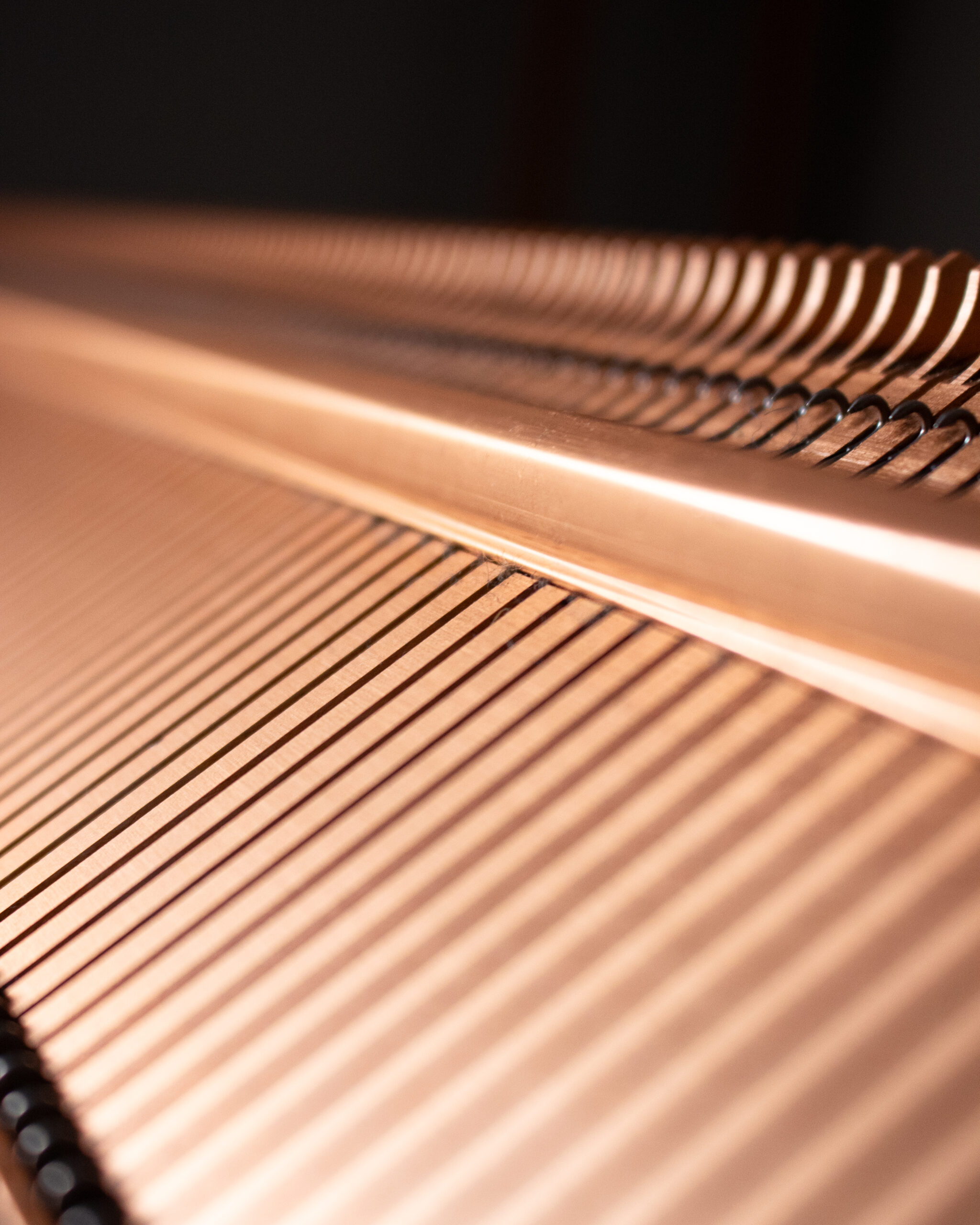
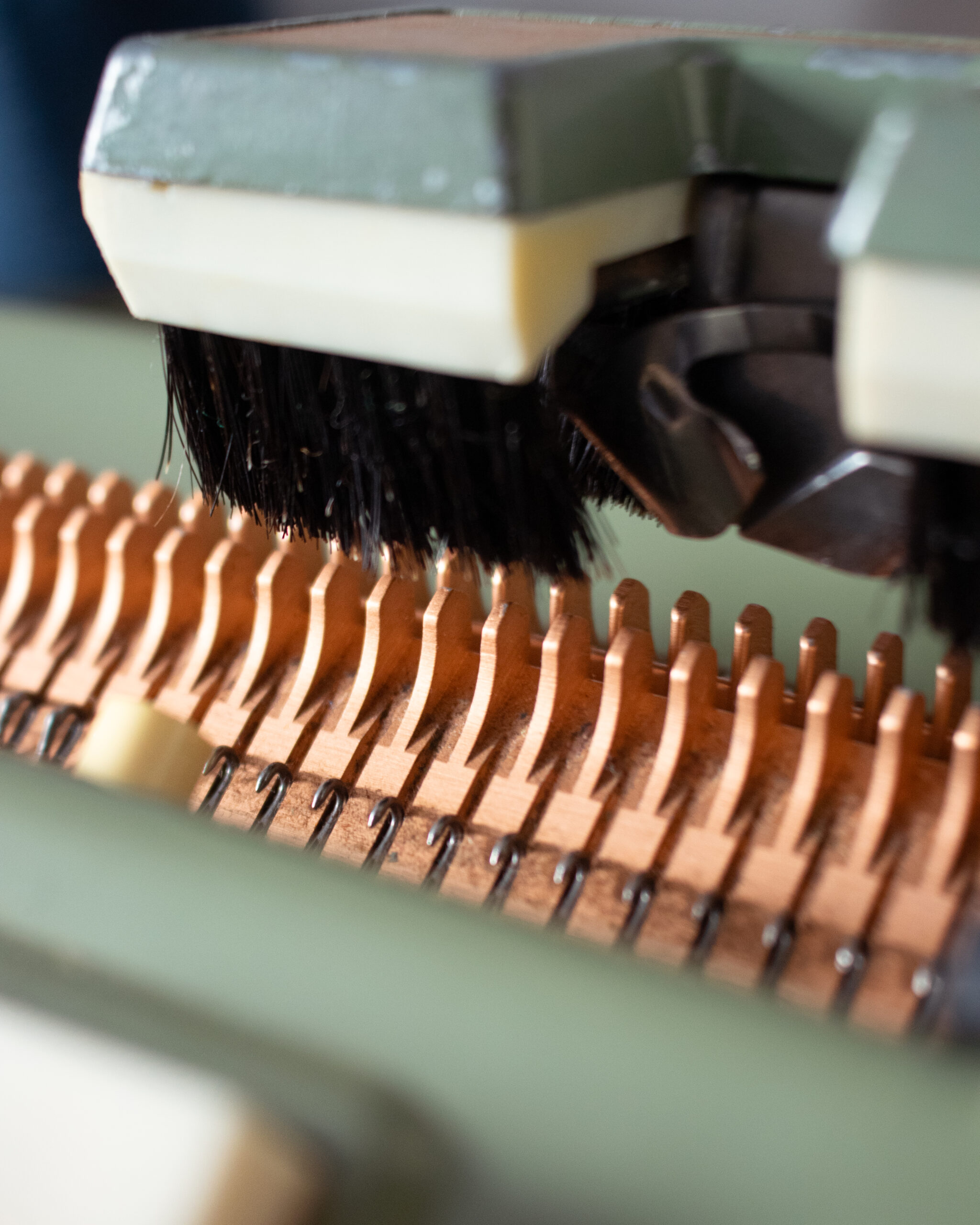
Domestic knitting machines in Shetland could refer to a few types of knitting machine, each with a different capability. These all create knit stitches in the same way, by using latch needles to hold each stitch. The bed of the knitting machine has slots to hold around 200 needles.
In all cases, a row of knitting on a domestic machine is worked by feeding yarn and pushing a carriage across the bed of needles. The carriage controls the movement of the needles and their latches to create a knitted fabric. When in motion, the carriage first pushes a previously knitted stitch down the needle past the latch, feeds the yarn to each needle in turn to create the new stitch, then pulls the previous stitch back down the needle, which engages the latch to secure the new yarn, creating a new stitch to be formed.
V-Bed knitting machines (even smaller header)
These versatile machines were the first knitting machines to be used in Shetland, arriving in the 1930’s. They have two needle beds sitting in an inverted V position, with the needles from each bed pointing towards each other. Manual settings on this machine allow for the needles to either be engaged across one bed, and then the next, creating a seamless, tubular fabric, or to engage by alternating from one needle to the next on each bed, creating a flat panel of ribbed fabric. A variety of ribbing can be knitted by manipulating the position of the needles. V-bed machines can only knit using one yarn per row. Made entirely from metal, these hardy machines are still found and used in Shetland homes to this day.
Flat bed knitting machines (even smaller header)
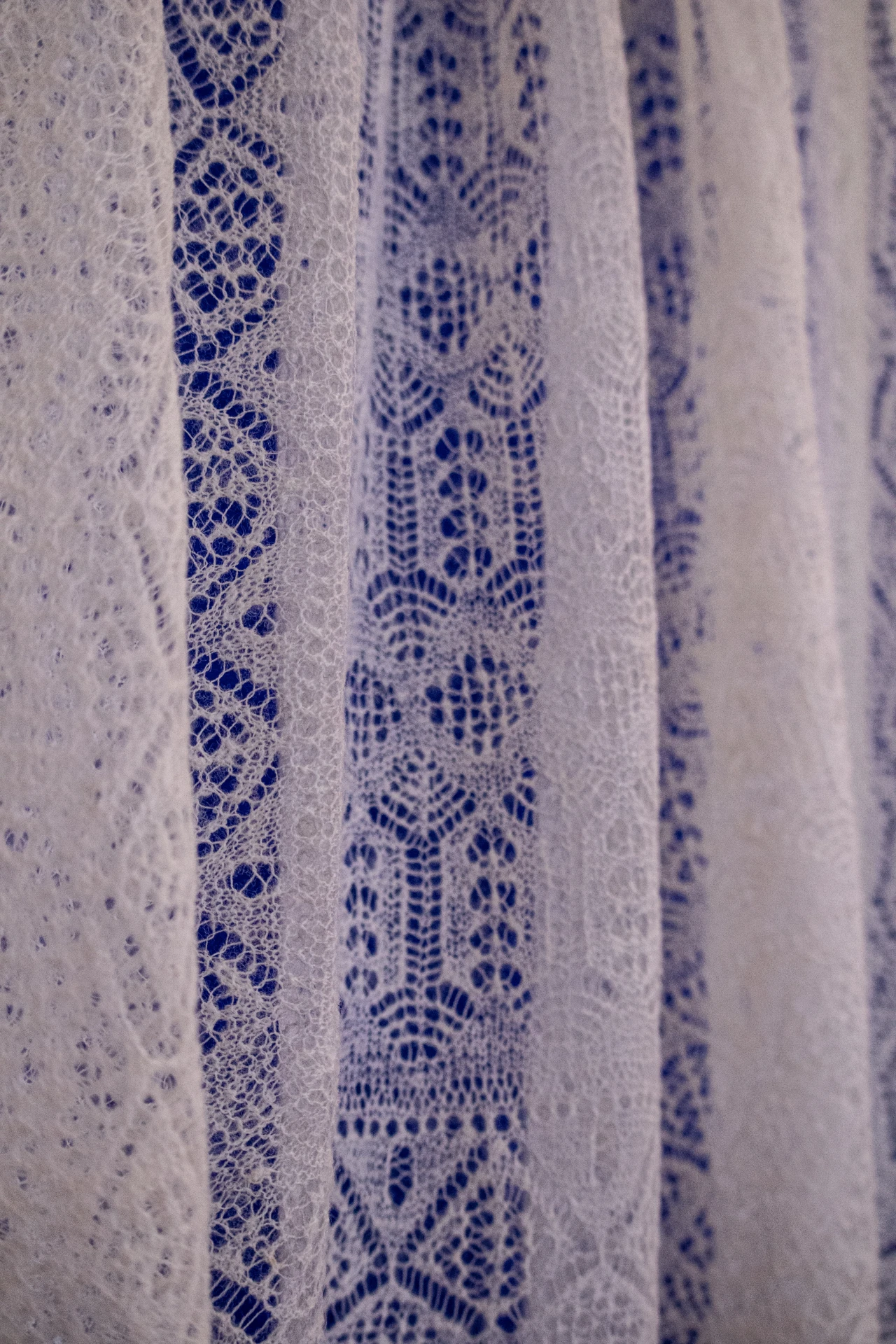
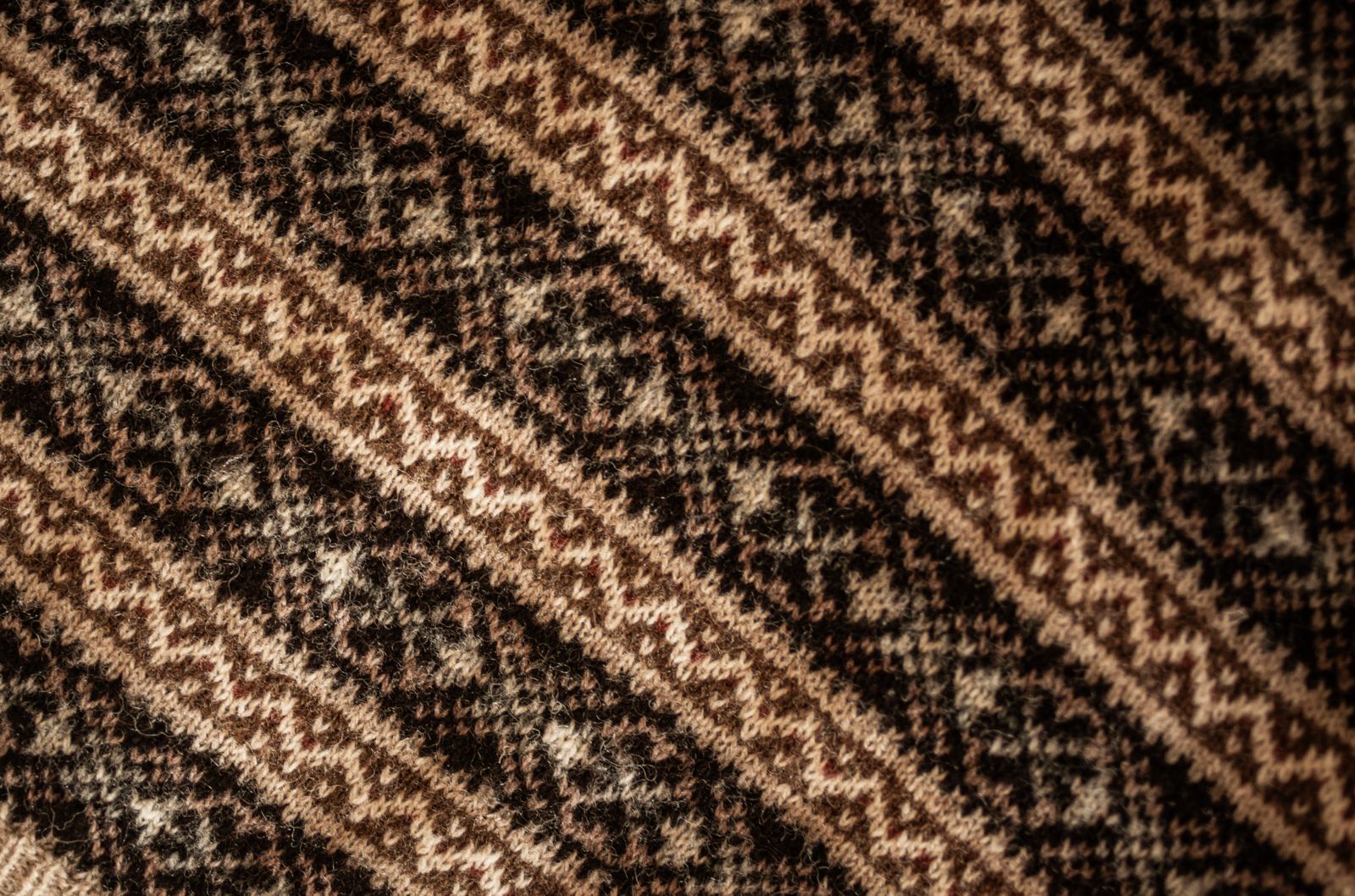
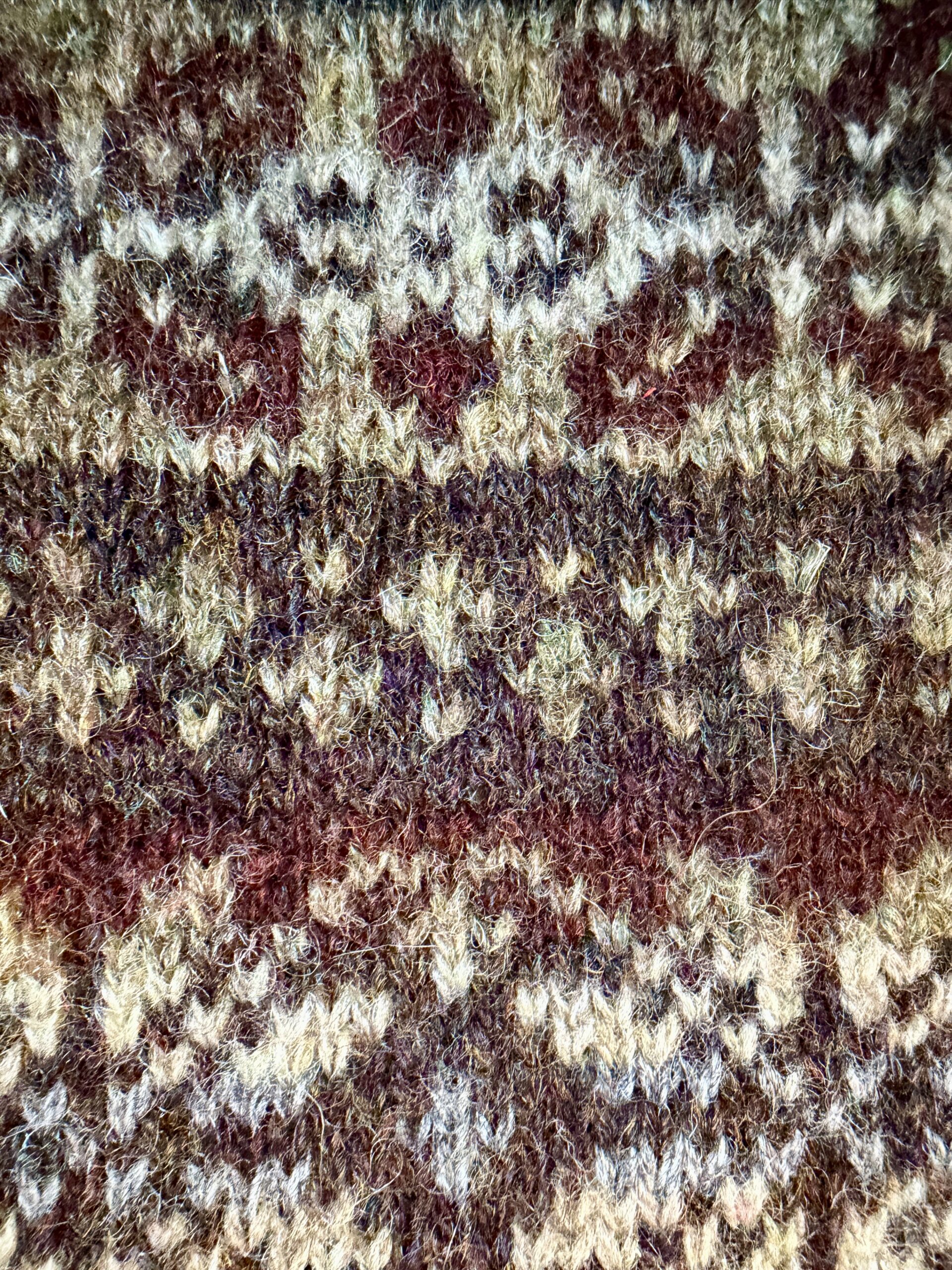
Flat bed knitting machines use one bed of needles. They are usually clamped to a table and can be housed in a case with a handled lid, so they can easily be stowed away. These machines only create flat panels of knitted fabric. Basic flat bed machines knit with one yarn per row, whereas machines equipped with a punchcard feeder can knit with up to two yarns per row, which allow the knitter to create Fair Isle style colourwork. A punchcard machine can be used for both Fair Isle and lace knitting by using the correlating punchcard and carriage for the desired style.
Other tools used in domestic machine knitting include:
- Thin, 1mm picking up wires (needles)
- Claw weights
- Hook weights, some of which were handmade using lead or scrap metal from the croft or fishery supplies
- Punchcards and hole punches
- Hooked hand tool
- Latch needle hand tool
- Eyed stitch transfer tools, single, double and triple pronged
- Row counter
- Cast on combs
- Knitting machine oil
Typically, Shetland’s Fair Isle knitters used the abundance of Shetland wool available to them. Other types of yarn have come in and out of fashion including nylon, acrylic and cotton. These fibers were used for a variety of reasons including durability on heels and elbow sections, wash-and-wear convenience, and market demand. Today, most Shetland knitters consider Shetland wool to be the ideal option for traditional Fair Isle and lace knitting, including when produced on knitting machines.
Machine knitters generally prefer yarn on the cone as this feeds easily into the knitting machine and many yarn producers offer oiled yarn which moves even more easily through the machine.