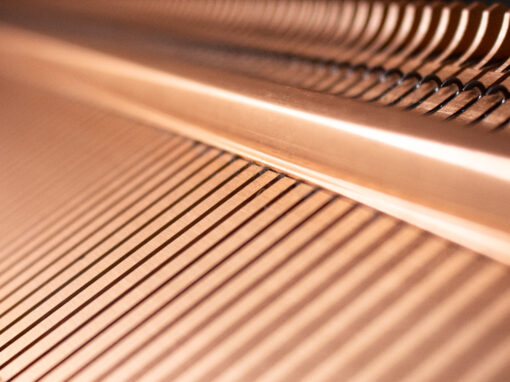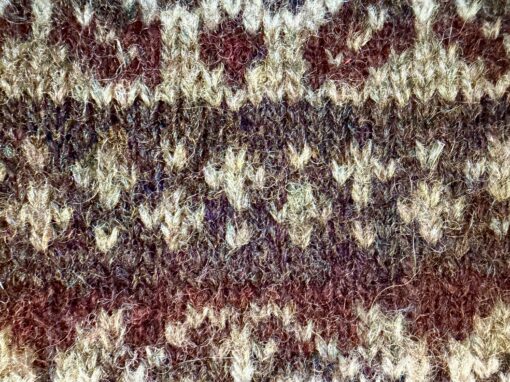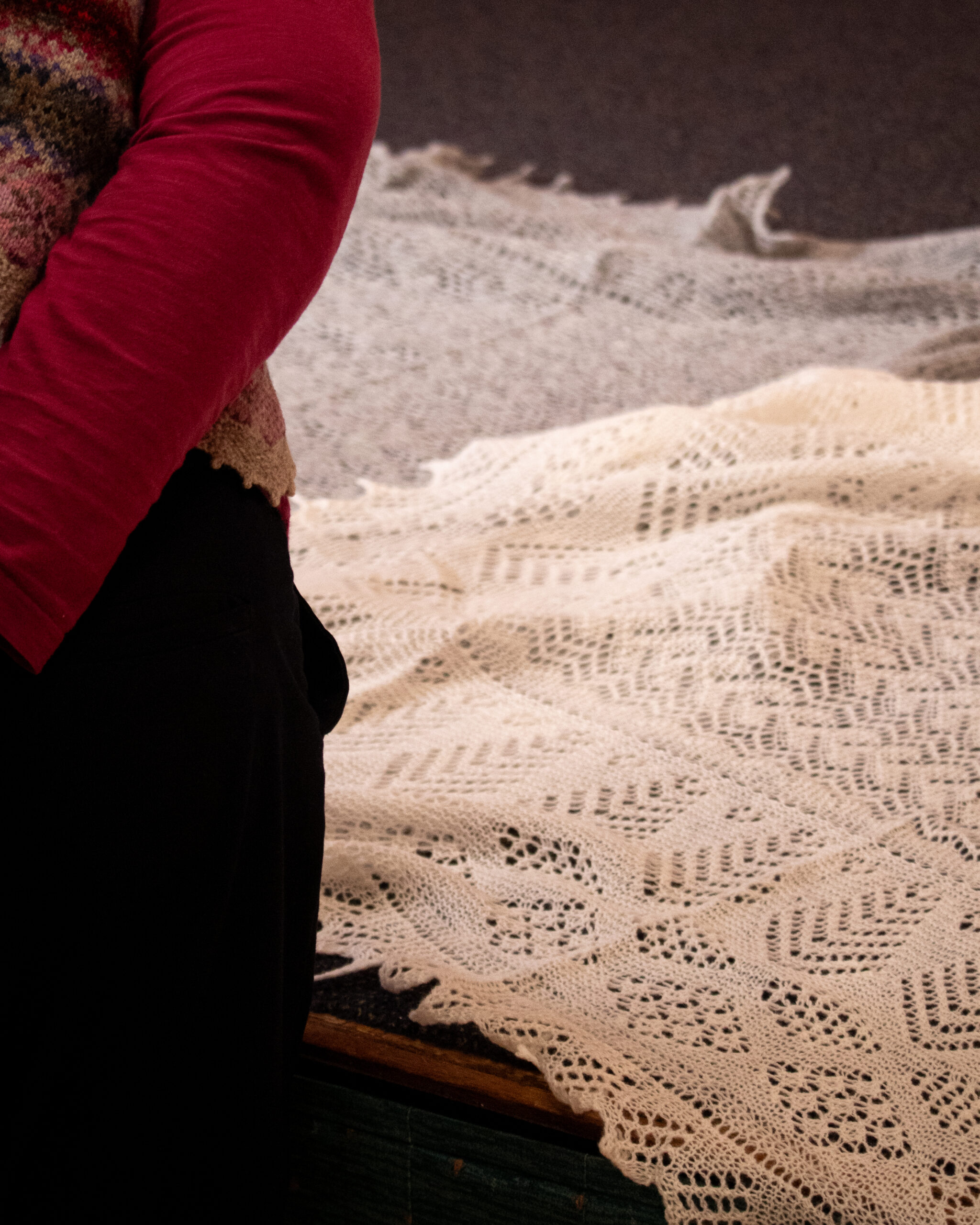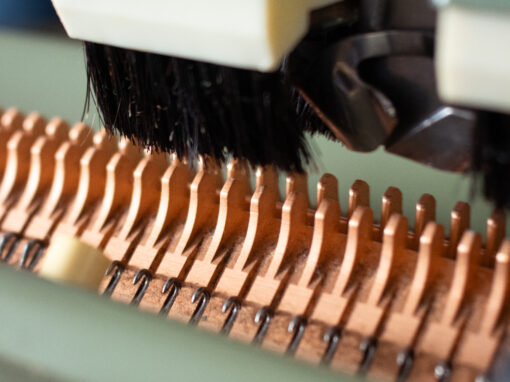
Some people are surprised to learn that SOK: Shetland's Organisation for Knitters includes domestic machine knitting as part of our work to preserve Shetland's living knitting heritage.
When people think of Shetland's knitting heritage, they often think first of hand knitting. That is understandable. Fair Isle knitting and Shetland lace are both central to the story of Shetland knitting, and are typically presented in terms of hand knitting.
But that is not the whole story.
Domestic machine knitting also has a role in Shetland's living knitting heritage.
For some people, the word 'machine' suggests something industrial, automatic, or detached from the maker. It can sound as though the machine has taken over the work and removed the need for human skill. That is not an accurate way to understand machine knitting.
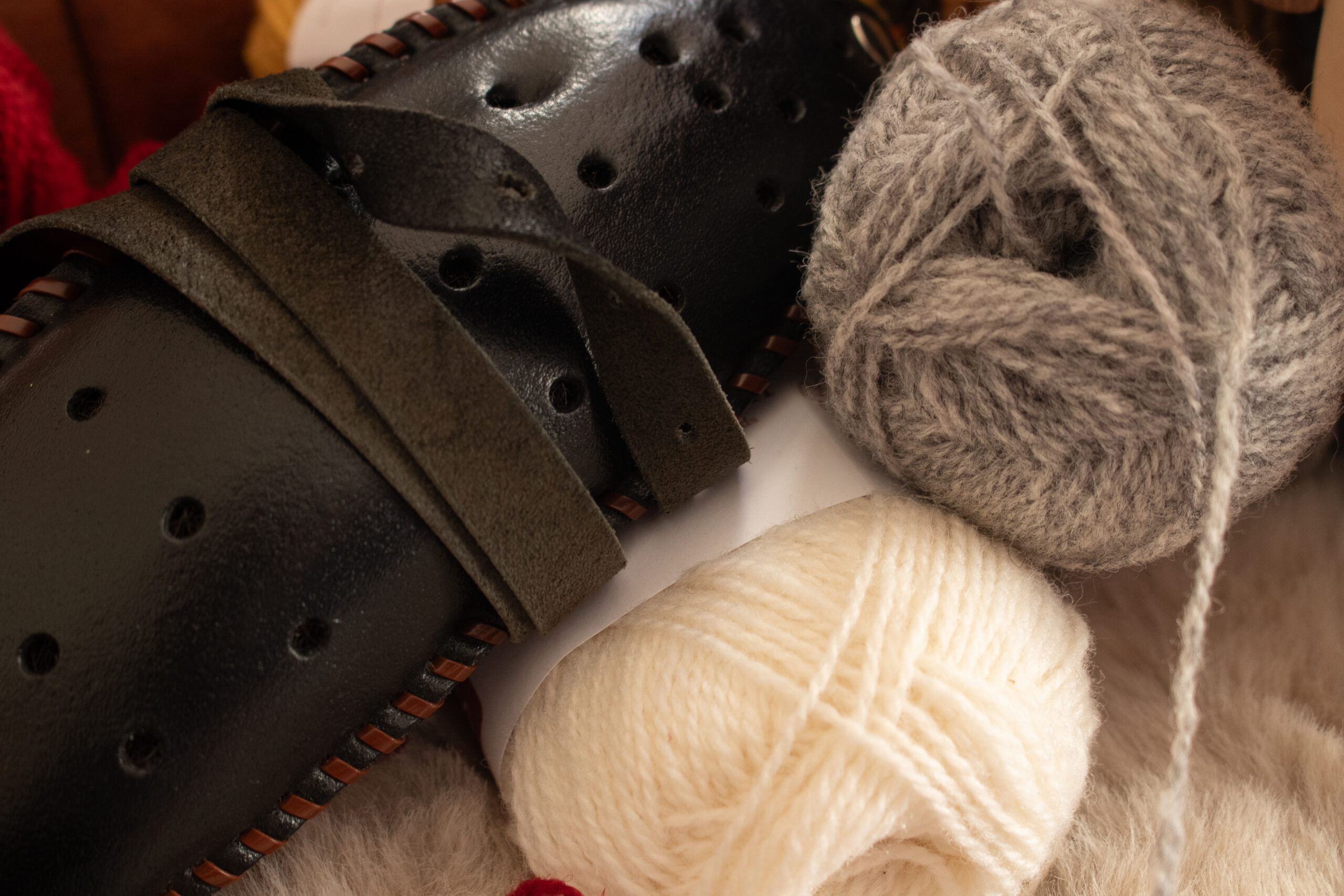
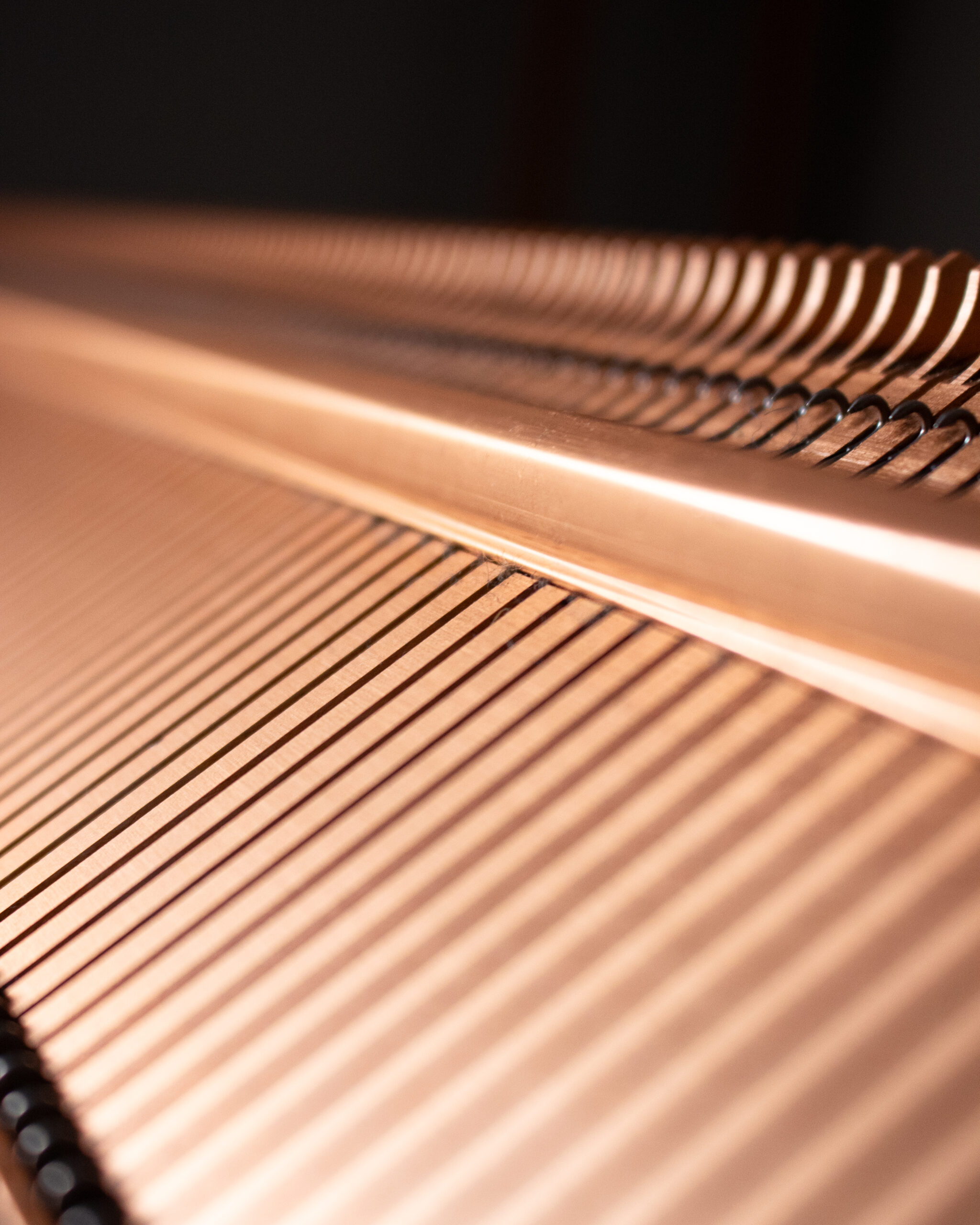
A domestic knitting machine is not the same as a fully automated factory machine. It is a tool designed for home use. Marie Bruhat, a machine knitter living on Fair Isle, draws a distinction between mechanical and electronic. Many of the domestic machines in Shetland are operated by hand, requiring no electricity. But even with the electric models, the knitter still has to understand yarn, tension, shaping, colour theory, pattern placement, finishing, and fit. The work still requires attention, judgement and experience. Mistakes still happen, and they must be fixed by the person doing the work.
In other words, domestic machine knitting requires its own set of skills.
Historically, machine knitting in Shetland was practised in partnership with hand knitting. In post-war Shetland, households acquired domestic machines, which allowed the knitters to produce sections of plain knitting quickly, like the body of a jumper, then add sections of hand knitting such as a Fair Isle or lace yoke, and finish the piece by adding machine-knitted ribbing to the openings. In time, machines developed that allowed knitters to produce Fair Isle and lace pieces as well, but that simply added to the amount of skill the machine knitter had to possess.
It's tempting to keep heritage stories tidy and downplay certain elements that complicate the message. But real working traditions are rarely simple. Tidying up the story can erase elements of a living craft that still hold meaning for people. For instance, it's common for older Shetlanders to speak fondly of falling asleep to the sound of a parent using the knitting machine in the other room.
In Shetland, knitting has long been practical. As fashions shifted, so did Shetland knitters. As tools developed that added value, Shetland knitters adopted them. Shetland knitting has been done in homes, workrooms, small businesses, and larger local knitwear firms. It has involved hand needles, domestic machines, and, more recently, industrial machines. And it has involved the knowledge needed to move between them.
If heritage is only described through the most romantic version of making, we risk losing sight of the people who used their skills to earn money, support households, and keep Shetland knitwear visible in the world.
There is also a question of respect. Domestic machine knitting has often been treated as if it is somehow less skilled than hand knitting. Yet Shetland makers who work with both hand and machine knitting have spoken up about wanting to change this myth. Terri Leask, a hand- and machine-knitter born in Shetland, has said that machine knitting needs 'just as much concentration as hand-knitting, if not more.' The machine may form the stitches, but the knitter is still actively involved: making decisions, designing, managing progress, handling colour, and finishing the piece by hand.
This is why SOK includes domestic machine knitting in its work alongside Fair Isle knitting and Shetland lace. These heritage crafts have different histories and different techniques, but they are all part of Shetland's living knitting heritage.
Leaving machine knitting out would give an incomplete picture of Shetland's knitting history. It would overlook the knitters who skilfully used domestic knitting machines. It would overlook a practice that is still remembered, used, and worth understanding.
SOK wants to ensure that domestic machine knitting is not treated as a footnote in Shetland's textile history. Our hope is not to preserve only the most familiar parts of Shetland's knitting heritage, but to protect the fuller story. Domestic machine knitting belongs in that story.