We held our first Traditional Makkin Session earlier this month and are thrilled to have more dates scheduled over the coming months. Providing opportunities for local people to share and pass on traditional Shetland knitting skills is a key part of SOK’s mission, making these gatherings particularly meaningful.
What to Expect
The aim of these sessions is to create opportunities to learn traditional techniques from local people within our community in the way the skills have historically been passed on. Learning might come through watching, doing, asking questions, or spending time with someone who has knowledge of the techniques and can pass them on, demonstrating in person.
Each session will feature an invited guest who will bring along a piece of work to serve as a starting point for discussion. However, attendees are encouraged to bring along their own work, questions and experiences, and conversations may cover any aspect of traditional Shetland knitting.
Our First Session
Our first session was a lovely and laid back, with a few people nipping in to say hello, and many topics covered.
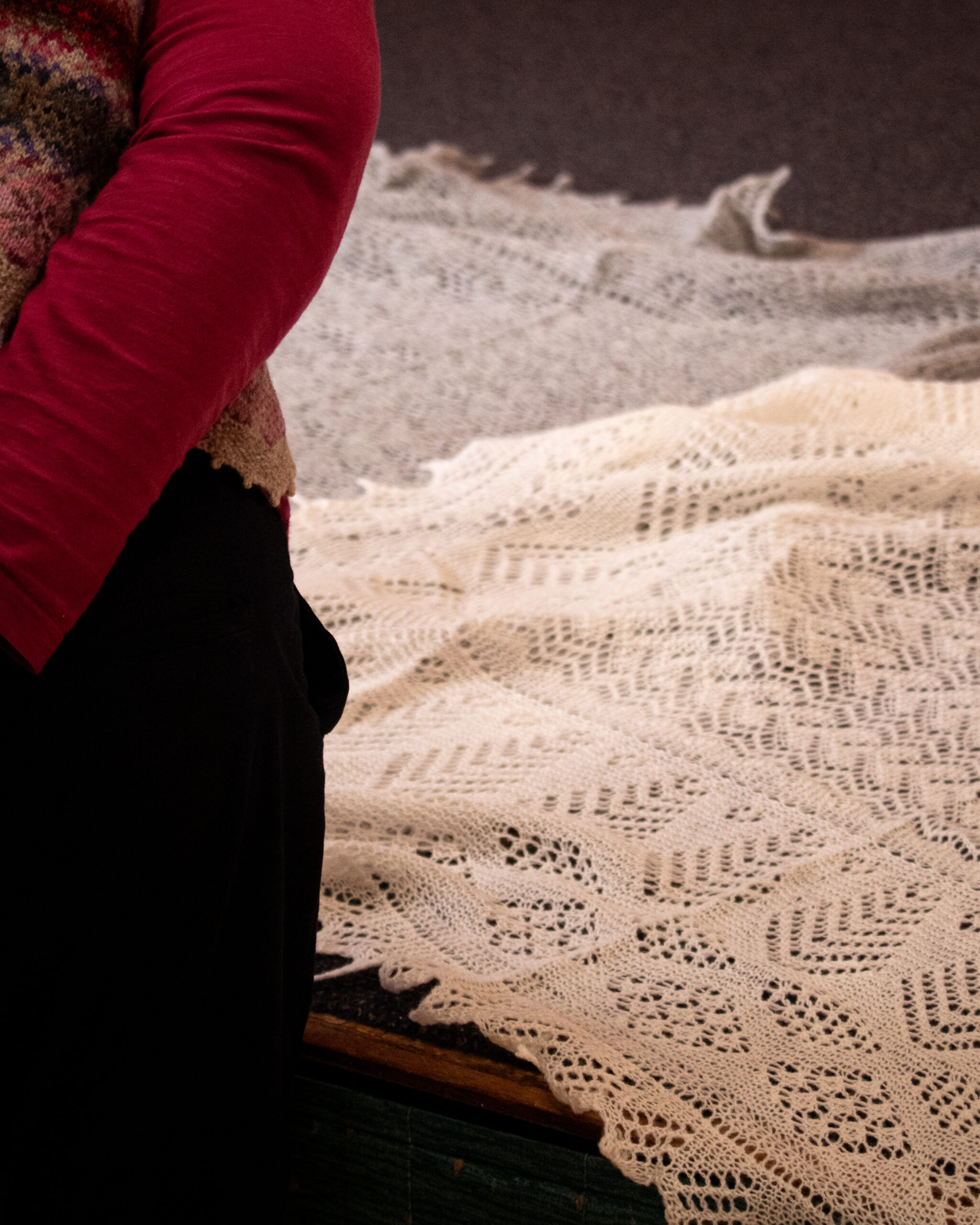
Elizabeth Johnston brought along samples relating to Mrs Hunter’s Shawl, including an example of how the pattern was originally published by Patons before she re-wrote it using the traditional construction methods that would have been used when the shawl was first knitted.
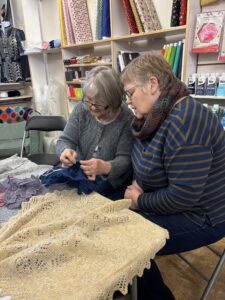
It was fascinating to see the different samples side by side. One showed individual pieces waiting to be sewn together, while another was a miniature version of the hap knitted in one piece, with only two border edges left to be joined. Seeing them side by side was a great illustration of the difference between the two approaches to construction.
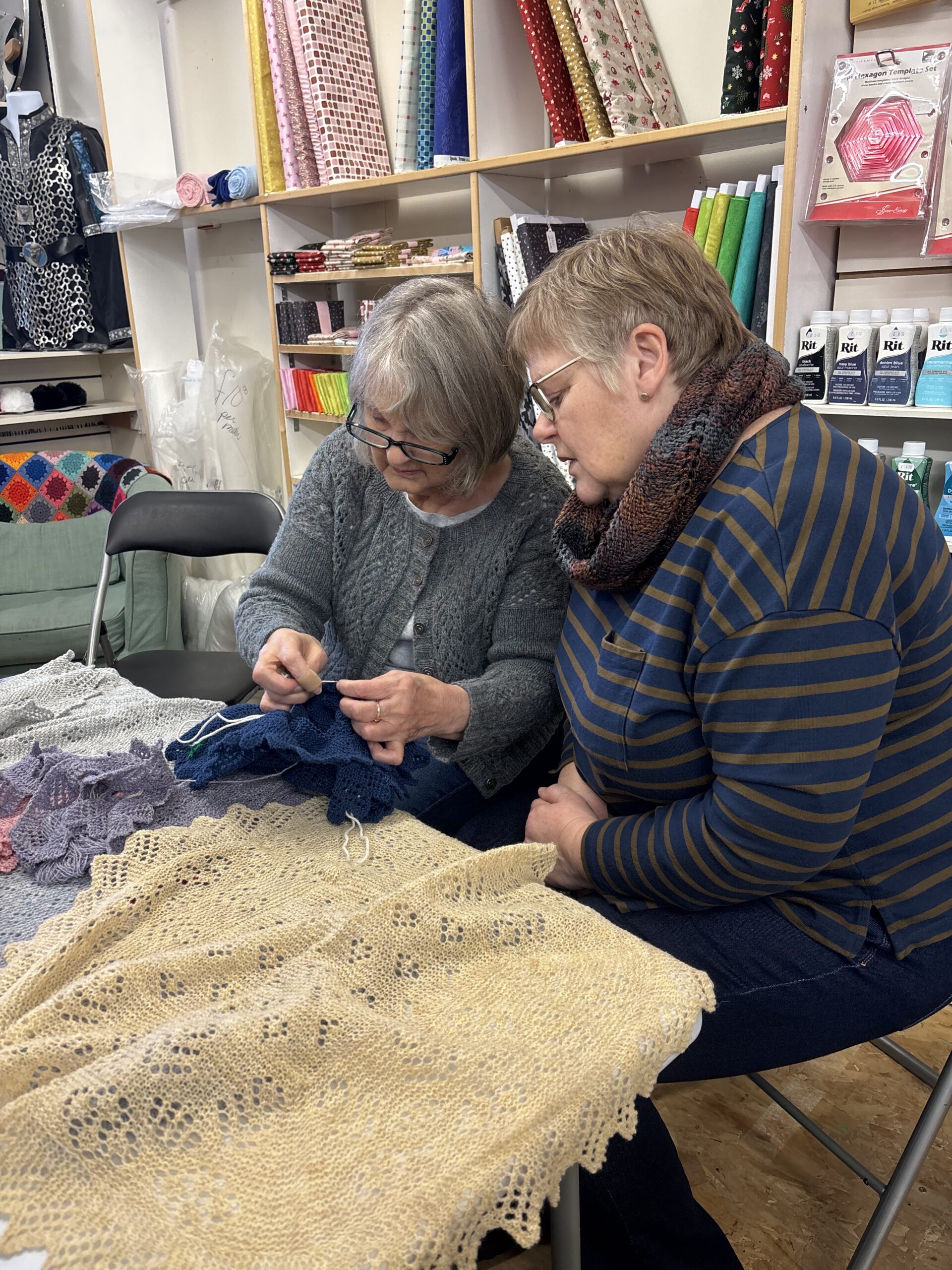
One of the most common questions Elizabeth receives about the Mrs Hunter’s Shawl pattern is how to sew up at the end. Using the sample she brought along, she demonstrated how she joins the borders and talked us through the finishing process. Pictured is Sheila Williamson having a closer look.
Printed copies, as well as a suitable yarn for the Mrs Hunters Shawl Pattern, is available from Loose Ends, alternatively the digital pattern can be found on Ravelry.
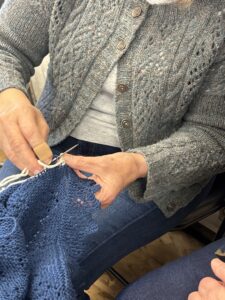
Hap construction naturally became a main topic of conversation, including the merits of knitting the centre first versus the lace edging first. While both ways are traditional to Shetland, Elizabeth explained why she prefers to begin with the edging. Mainly because that’s what she was taught, interestingly, by two knitters from different parts of Shetland: her aunt and an in-law.
Riggies (garter stitch) also came up while discussing haps. Why is riggies so often used, particularly in new shell? Elizabeth could tell us right away that riggies are warmer than flat knitting (stocking stitch). The thicker, springier surface traps more air, holding onto warmth generated by your own body. Lace knitting is also warm because there is room for warm air to be trapped in the holes, and the added texture of the riggies offer even more chance for extra insulation.
Since Elizabeth was with us, we asked about the pattern that has recently been published in the Shetland Wool Week Annual: The Hömin Tunic. Her tip is to pay close attention when it comes to dressing the finished tunic. The centre three-together at the top of each lace repeat naturally tends to sit up. For best results, encourage the points to lay flat until it is dry.
A huge thank you to Dee and Estelle at Loose Ends for hosting us.
We thoroughly enjoyed our morning, and we’re looking forward to coming back on the 24th of November.
Join us during future sessions to discuss more about traditional Shetland knitting, share your experience and knowledge, bring along anything you’re working on, and ask questions to some of the most knowledgeable in our knitting community.
Updates on gatherings can be found on our Facebook Group for local people: SOK: Local Practitioners