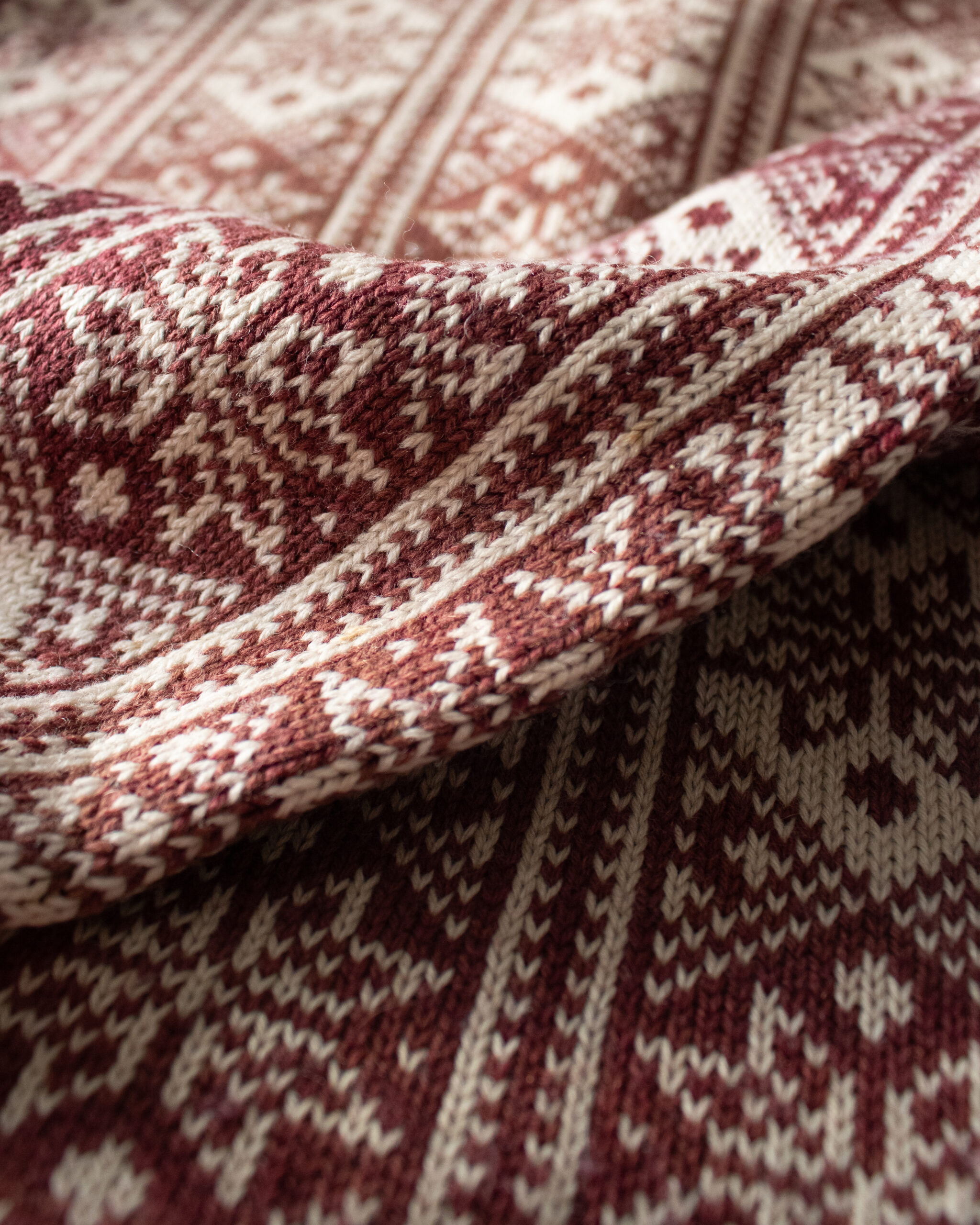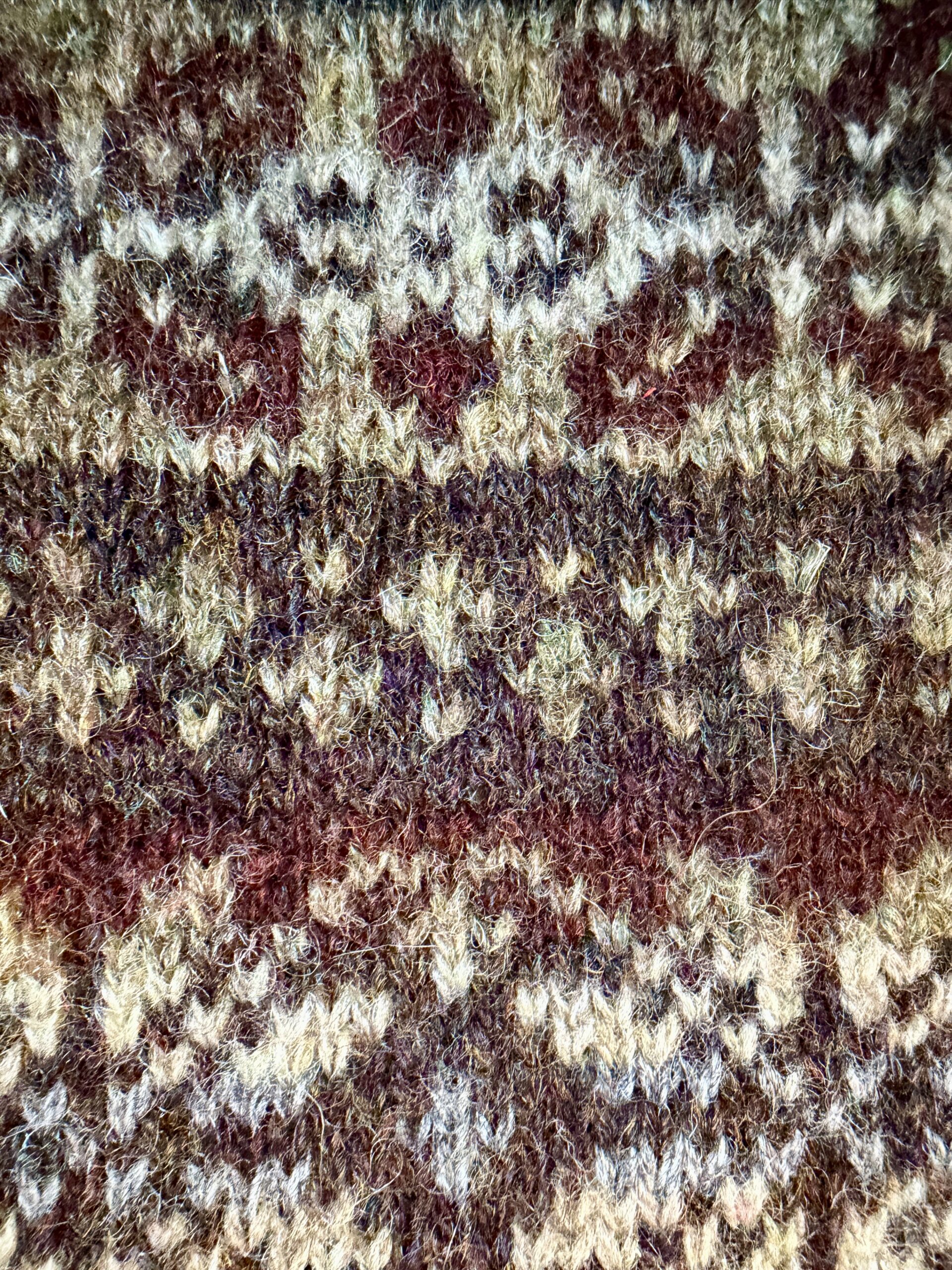
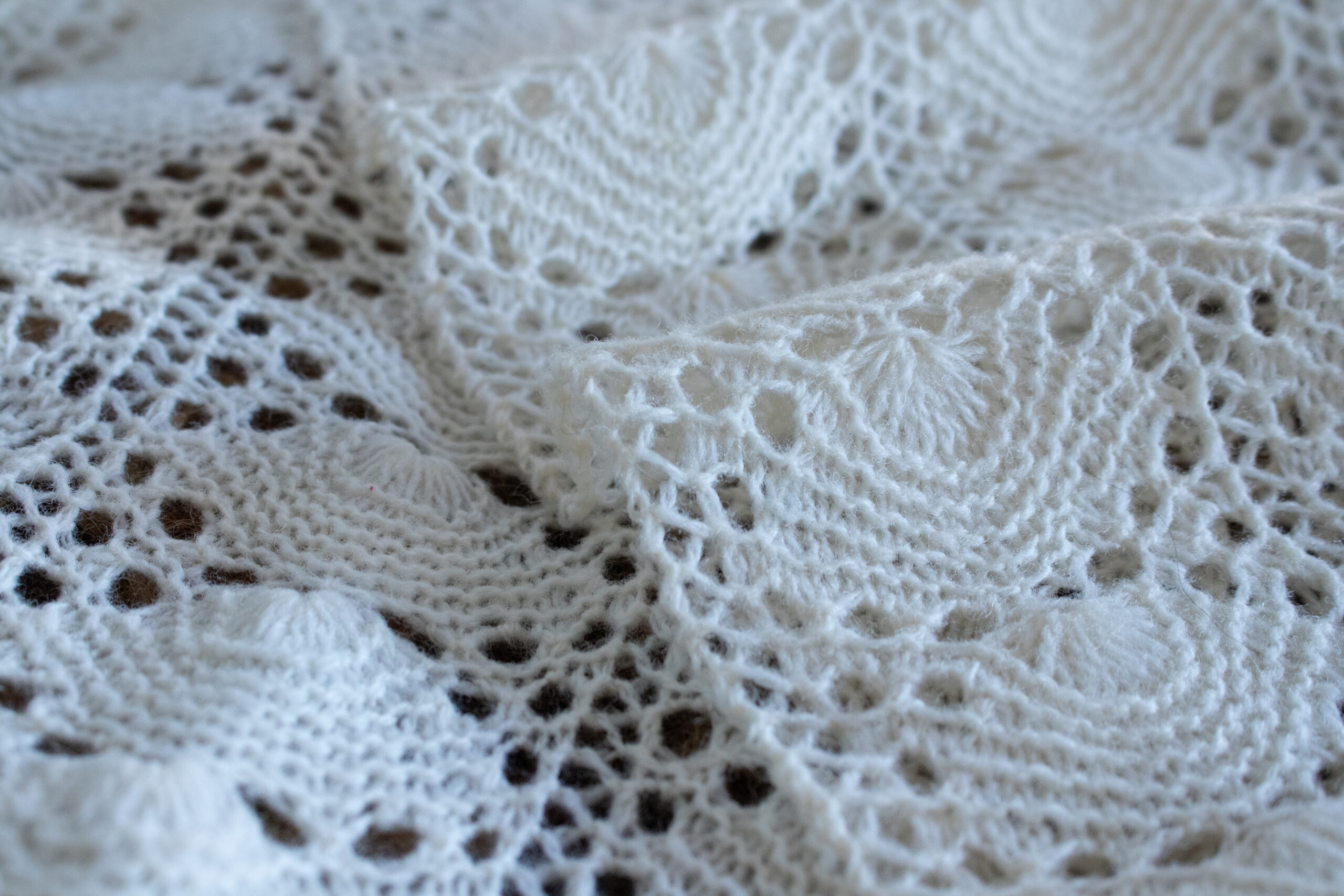
Over the last year, SOK has been contacted several times about lace shawls held in private collections. All of the shawls have been beautifully knitted and have shown a high level of knitting skill. Some have included patterns that are also used in Shetland lace, or openwark, knitting. But in most of the examples that were shared with us, the shawls were not Shetland lace.
That does not take away from the beauty of the shawls themselves. They were all worthy of study and should be prized possessions. It just means they belong to a different story.
We know this misidentification of Shetland lace is common. The Shetland Museum and Archives and Shetland Textile Museum have also been contacted in the past by people who want to donate Shetland lace shawls that, upon further inspection, have not been part of the tradition. Because Shetland lace became so famous for its fineness, many people now use “Shetland lace” as a general name for fine knitted lace. A shawl may be white, delicate, and beautifully made, and someone will quite naturally wonder whether it is Shetland lace.
Sometimes it is. Often, it is not.
Fine Lace Has Many Traditions
Shetland lace is one heritage knitting tradition within the broader category of fine lace knitting. These other heritage traditions include Orenburg lace, Estonian lace, Haapsalu, Russian lace, Faroese lace, and many, many more. In addition to these recognised traditions, there are also skilled knitters who have been inspired by heritage traditions and created their own patterns for projects that have incorporated modifications to traditional methods.
Identifying Shetland Lace
A Shetland lace shawl is most often identified using the following characteristics:
- The elements of construction: A traditional Shetland lace shawl has a square centre surrounded by a border made up of four trapezoids, with a lace edging around the outer edge.
- Pattern choice: There is a wide range of patterns, or motifs, that are commonly used in Shetland lace knitting. Some of these patterns are also used in other traditions or are used in copies of Shetland lace shawls. Looking at how the patterns were placed within the design can also be a clue.
- The ground: For speedy production, Shetland lace knitters knitted every row for nearly every lace pattern. This means that upon close inspection, the patterns are set in a garter-stitch base.
Other heritage lace knitting traditions have their own distinctive identifying characteristics. When we call every fine knitted lace shawl 'Shetland lace', we blot out the skills, traditions, and histories of those other fine lace traditions. We also lose part of Shetland’s story, because Shetland lace techniques and histories become muddled up with other traditions.
Shetland Lace is Tied to Place
The story of Shetland lace is not just about the identifying characteristics. Shetland lace developed in a particular island setting, shaped by local skill, local materials, and outside demand. Local knitters created their shawls in the context of their daily lives to meet the demand of consumers from outside the isles. The process to knit one shawl could take a full year, and the work of Shetland lace knitters formed an important part of the culture and economy of Shetland for decades.
That demand is an important part of the story of Shetland lace. Fine Shetland lace shawls, veils, stockings, and other lace pieces were prized by buyers who valued their lightness and the skill needed to create them. As the reputation of Shetland lace grew, so did the market for anything that looked like it. Copies of Shetland lace soon followed.
When Popularity Leads to Imitation
That is not unusual in textile history. When a specific look becomes the style, others imitate it. Patterns are created for hobbyist knitters that may or may not adhere to the elements of what makes something Shetland lace. Commercial sellers borrow the language to advertise items that are 'close enough'. Makers in other places respond to demand by knitting versions of the products they see without understanding every aspect of the tradition.
This is one reason fine lace shawls can be difficult to identify as belonging to a particular tradition. A shawl may include motifs seen in Shetland lace, but motifs travel. A shawl may appear to have traditional construction but was achieved using different methods.
The same is true of fineness. A shawl may be extremely fine and still belong to another tradition. Some fine lace shawls from other traditions have distinctive, identifying characteristics, like the nupps of Estonian lace or the construction of a Faroese shawl. It may be a Victorian pattern knitted in a parlour in Manchester from a book written by a designer interpreting a shawl she had seen worn in public. Shawls like this may have their own history that deserves to be found, rather than being folded into Shetland’s.
Properly identifying and naming traditional lace helps everyone. It protects Shetland lace as Shetland lace. It also gives other lace traditions room to be recognised on their own terms.
A Living Tradition
At the same time, Shetland lace should not be treated as if it exists only in one form.
Many people picture Shetland lace as a large, fine, white shawl. That image is iconic, and there are plenty of knitters within and outwith Shetland who continue to knit these historic shawls. But Shetland lace knitters have never been frozen in the past. They have responded to fashion, markets, and materials.
As tastes changed, Shetland lace knitters adapted. They knitted not only shawls, but veils, stockings, undergarments, scarves and other accessories. They used their skills in ways that met demand and allowed the tradition to continue. They knitted using Shetland wool as well as silk and mohair, depending on what was available to them and what may have been requested by the buyers.
That same adaptability can still be seen today. Contemporary Shetland lace appears in shawls with non-traditional shaping, jumpers, cowls, hats, and other accessories. These modern forms show that Shetland lace is a living heritage skill, not a historical artefact. A modern cowl made by a Shetland lace knitter may carry the tradition forward. A very fine antique shawl from somewhere else may not be Shetland lace at all.
The question is not simply, 'Is it fine?' The better questions are: Where did it come from? Who made it? What is known about the maker? What fibre was used? What construction was used? Is there evidence connecting it to Shetland? Does the piece belong to the Shetland lace tradition, or does it only resemble it? Is it actually an example of fine lace knitting from another tradition?
Sometimes the answer will be clear. Sometimes it will not. Many handmade textiles have travelled through families and collections with only fragments of their story attached. In some cases, the most accurate assessment we can offer when asked is, 'This is a beautiful lace shawl, but we cannot confirm that it is Shetland lace.'
That is not meant to be dismissive. it is simply a statement of fact.
Why Names Matter
SOK exists to preserve and protect Shetland’s knitting heritage, including Fair Isle, Shetland lace, and domestic machine knitting. Part of that work is helping people use accurate language. We do this not to shame anyone, but to protect the meaning of the language tied to our living knitting heritage.
If a modern lace item was designed using Shetland methods and patterns, and with a true understanding of what makes Shetland lace a living heritage craft, it may be appropriate to refer to it as Shetland lace. Or, it may be more respectful to the tradition to refer to it as 'inspired by Shetland lace', 'referencing Shetland lace', or 'drawing from the tradition of Shetland lace'.
Shetland lace deserves to be understood as more than a method of producing fabric. It is a tradition rooted in Shetland, shaped by Shetland knitters, and carried forward by makers who have continued to adapt their skills across generations. It is an aspect of living heritage that still influences Shetland's culture.
Other fine lace traditions deserve the same recognition.
When we name each tradition properly, we make more room for all of their stories to be seen.